

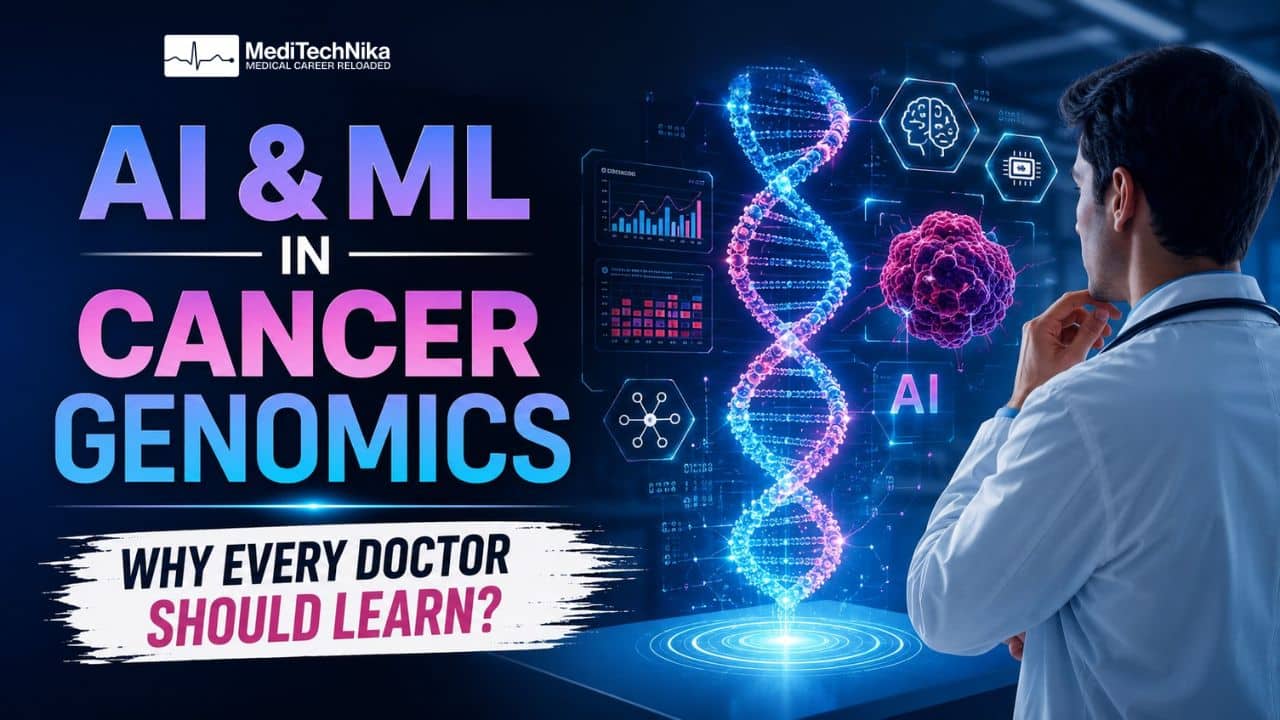
AI & ML in Cancer Genomics
Medicine has never been just about treating a disease. It has always been about understanding the people behind it. Behind every pathology report, every scan, and every diagnosis is a patient hoping for answers and a doctor trying to make the best possible decision. Every patient is unique, every cancer behaves differently, and every treatment decision demands careful thought and clinical expertise.
Over time, medicine moved from relying exclusively on clinical observations to incorporating imaging, molecular diagnostics, and genomics. Today, one more technological advance is added to this list—Artificial Intelligence (AI). AI doesn’t aim to replace doctors; instead, it helps them comprehend complicated medical data and reveal patterns within large genomic datasets.
With precision medicine becoming the future, understanding AI enables better interpretation of genomic reports in cancer care. Physicians do not have to learn to program; however, understanding such technologies may benefit their future work.
AI is no longer an emerging field in the domain of oncology. The global AI in healthcare market is expected to be worth more than USD 180 billion in 2030, according to Grand View Research, and oncology will continue to be among the most promising uses of AI. Moreover, genetic sequencing is becoming easier and cheaper, making it possible for doctors to integrate molecular data along with other diagnostic methods into cancer therapy. With these developments in medicine, knowing how AI works is no longer only about technical proficiency but is also clinical competence.
Cancer Care Has Changed More Than We Realize
Cancer treatments depended largely on the type of cancer, the stage of development, and previous treatments in similar conditions. Despite their continued relevance, modern physicians have access to far greater data than ever before.
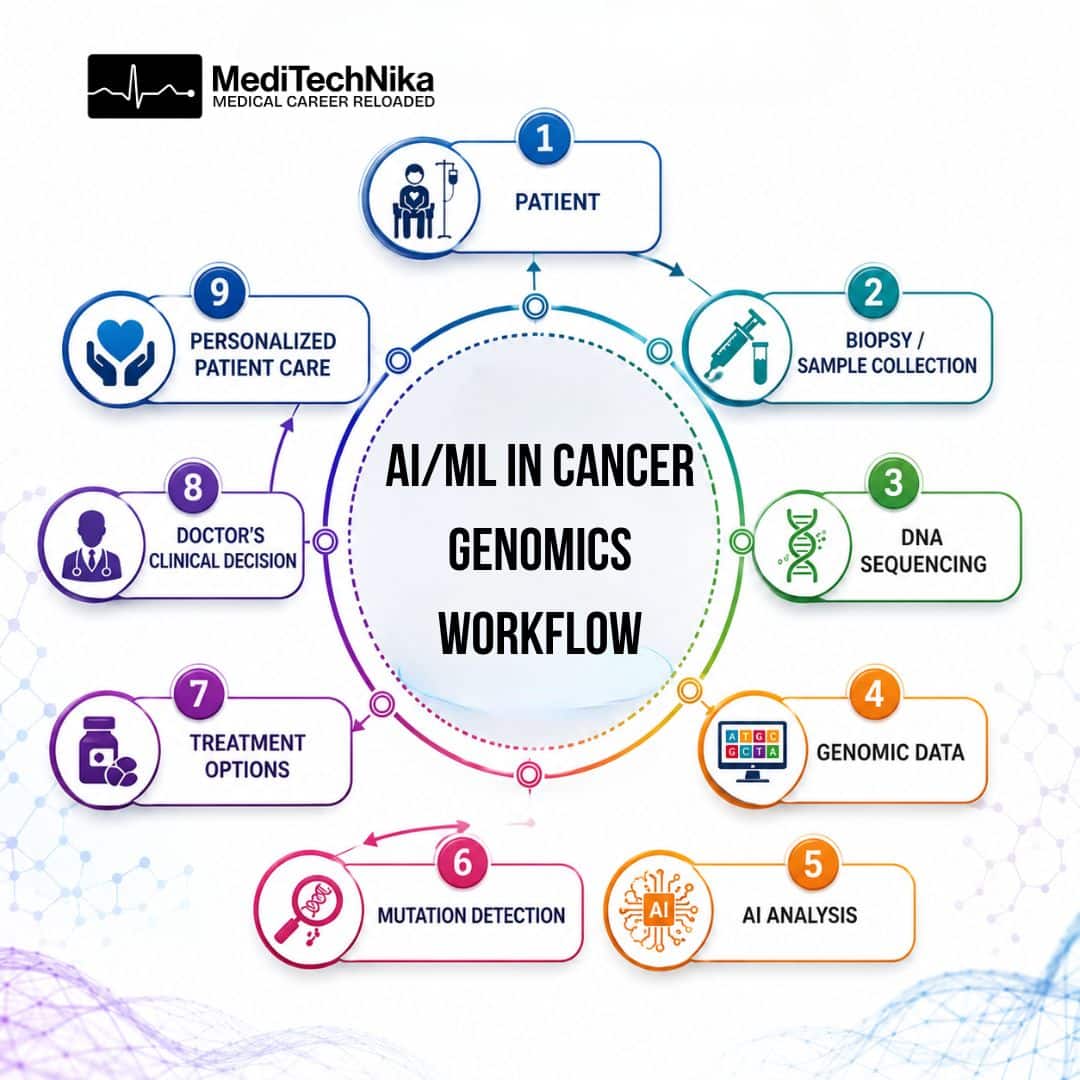
Genomic sequencing enables physicians to detect mutations, markers, and molecular signatures that affect the development of cancers and reactions to therapy. Instead of focusing on “what is the type of cancer?”, clinicians are now interested in “what genes drive this patient’s cancer?”
This shift represents one of the most significant changes in the field of oncology in recent years. While previously oncologists treated cancer patients according to which organ had the disease, today AI in Cancer Genomics is used more often to determine which particular mutations cause the specific form of cancer that the patient has. This has resulted in the creation of a new field called precision oncology.
Understanding AI Doesn’t Mean Becoming a Data Scientist
Healthcare professionals often misunderstand that the topic of artificial intelligence applies solely to people in engineering or software development.
This simply is not the case.
Physicians are not required to design algorithms. Instead, they should know what the systems do, how they make predictions, and what limits them. In much the same way as doctors have had to read images from an MRI scanner despite not building such a device, understanding AI in Oncology will entail being a knowledgeable user rather than a technology expert.
The more physicians know about these systems, the more able they will be to read reports and communicate their findings to patients, as well as work with other healthcare specialists like geneticists and bioinformaticians.
The Growing Role of AI in Cancer Genomics
A whole-genome sequencing experiment can produce several hundred gigabytes of data and thousands of genetic variants. Interpretation of such results without the help of artificial intelligence becomes quite difficult.
Information is generated from each genome sequencing analysis, which helps discover mutations responsible for diseases, targets for treatments, methods of developing resistance, and risks of inherited cancer.
Analyzing such a huge volume of information manually takes much time.
Here, the application of artificial intelligence in Cancer Genomics becomes helpful.
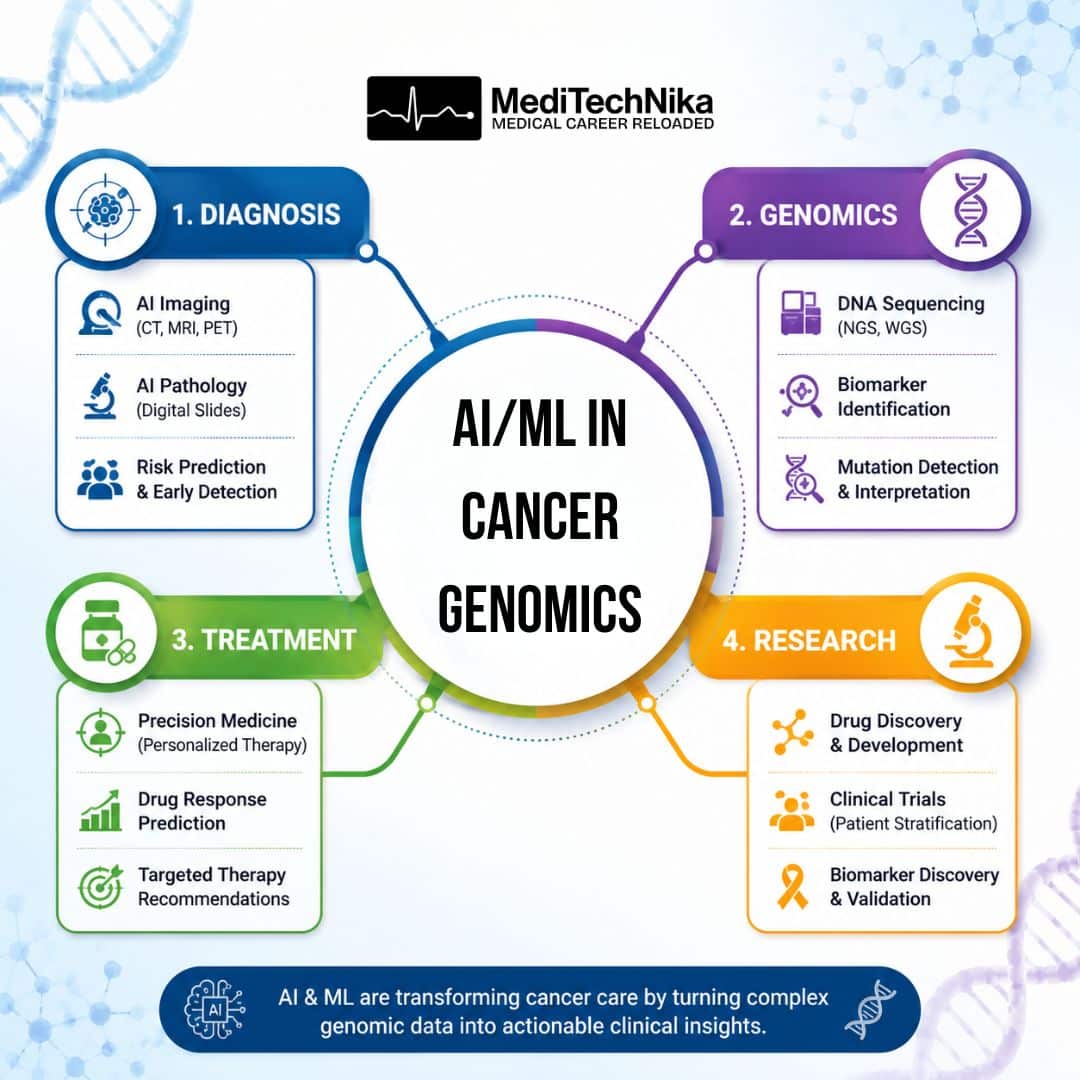
AI algorithms can rapidly prioritize clinically relevant mutations, identify potential biomarkers, and assist researchers in distinguishing pathogenic variants from benign genetic changes. Instead of replacing physicians, it helps to structure information more understandably.
For instance, an AI tool can detect a mutation making the patient a candidate for targeted treatment and genetic modifications causing drug resistance. Still, the decision regarding what should be done remains with the physician.
With the development of genomic tests used in hospitals and diagnostic laboratories, knowledge about AI in Cancer Genomics may become an integral part of the work of many physicians.
AI Platforms Already Transforming Cancer Care
Doctors do not need to imagine how AI might be used in oncology. It is already being integrated into clinical workflows worldwide.
Some examples are,
- Tempus – An AI solution that uses clinical, pathology, imaging, and genomic data to enable precision oncology and treatment choices.
- Foundation Medicine (FoundationOne CDx) – A genomic testing solution that detects clinically actionable mutations and provides targeted therapies for patients with cancer.
- PathAI – An AI-based solution that develops digital pathology tools to assist pathologists in the identification of cancer patterns.
- Paige AI – Helps pathologists detect anomalies from whole slide images using deep learning.
- DeepVariant (Google DeepMind) – An AI-based solution that uses deep learning to enhance variant calling from next-generation sequencing.
- AlphaMissense (Google DeepMind) – Predicts the pathogenicity of missense genetic variants.
- MSK-IMPACT – A next-generation sequencing solution created by the Memorial Sloan Kettering Cancer Center that detects clinically actionable mutations to assist in precision oncology.
Knowing how these tools work allows physicians to better understand laboratory reports, communicate findings with multidisciplinary teams, and explain genomic results to patients.
Machine Learning is Helping Doctors Deliver Better Cancer Care
Artificial Intelligence is an extensive area, whereas Machine Learning is one of the most practical tools in medicine.
To be more specific, machine learning makes computers capable of recognizing patterns through learning on big data sets rather than just using the rule-based method.
For instance, in oncology, Machine Learning for Cancer Care can be applied to support doctors in various aspects.
Thus, this tool will be able to predict treatment effectiveness by analyzing genomic and clinical data of thousands of patients in the past. Also, it will be able to find out patients suitable for immunotherapy, calculate disease prognosis, recognize patterns in medical images, and develop personal treatment plans.
Moreover, scientists use Machine Learning for Cancer Care to discover new biomarkers, study tumor development, and select clinical trials.
All these innovations do not replace doctors’ clinical opinion but give them additional ground for making better decisions.
Why Should Doctors Learn the Basics of AI in Cancer Genomics?
The education of physicians was always connected with the development of science.
Physicians learned how to work with ultrasound, CT scanning, MRI, robotic surgeries, and electronic health records. Now, the next step in this process is AI.
Knowledge of AI in Oncology enables physicians to make a critical analysis of advice from artificial intelligence systems instead of using it uncritically. In addition, it allows doctors to educate patients regarding these new technologies.
Finally, doctors who know AI in Oncology can take part in multidisciplinary tumor boards, cooperate with genomic laboratories, and be involved in the research of precision medicine.
Nowadays, in many hospitals, AI literacy is becoming a professional quality rather than some kind of hobby.
What Doctors Can Learn About AI in Cancer Genomics?
Healthcare professionals do not need to become software engineers to work with AI. Instead, learning the fundamentals can help them confidently understand modern genomic reports and collaborate with multidisciplinary teams.
Major areas of study include:
- AI basics and applications in healthcare
- Machine Learning for predictive analytics
- Deep Learning for medical imaging and pathology
- NGS analysis pipeline
- Variant interpretation and genomics annotation
- Multi-omics analysis (genomics, transcriptomics, proteomics)
- Introduction to Python programming (optional but recommended)
- Ethics in AI, clinical validation, and implementation
Real-World Applications That Doctors Are Already Seeing
Despite artificial intelligence sounding like technology from the future, many of its uses can currently be seen in routine clinical settings.
Multiple hospitals employ AI-driven pathology solutions to analyze potential tissue abnormalities more effectively. Radiology units make increased use of AI-based diagnostic solutions to help locate abnormalities that could otherwise be missed.
In addition, AI in Cancer Genomics assists in analyzing sequence data and classifying genetic abnormalities and mutations associated with targeted therapy.
Furthermore, Machine Learning for Cancer Care is used to calculate risk factors of cancer recurrence, select suitable patients for precision medicine approaches, improve clinical trials recruitment, and provide therapy suggestions based on big data.
As the technologies mentioned above evolve, their presence in oncology clinics will likely increase even further.
Better Patient Conversations Begin with Better Understanding
Today’s patients are very knowledgeable individuals.
They come to their doctors armed with questions related to genetic testing, precision medicine, immunotherapy, and artificial intelligence. Some may even have read about the application of artificial intelligence for detecting cancer or customized genetic treatment on the internet.
Physicians well-versed in AI for Oncology will be able to provide accurate answers.
They will be able to educate their patients about what is possible with the help of artificial intelligence, which requires human intervention, and what cannot be done.
Research and Career Opportunities Are Expanding
There have been many possibilities resulting from the use of genomics and AI that go beyond clinical settings.
AI is creating new roles across pharmaceutical companies, molecular diagnostics, digital pathology, precision oncology, and clinical research. Organizations increasingly seek clinicians who can interpret genomic data, collaborate with bioinformaticians, and evaluate AI-assisted diagnostic tools.
Clinical professionals who are well-versed in AI in Cancer Genomics are gradually becoming more involved in clinical research, pharma development, biomarker identification, digital health, molecular diagnostics, and translational medicine.
Hospitals, biotech firms, pharmaceutical firms, diagnostic labs, and research centers are currently engaging in developing AI-based solutions for cancer diagnosis and therapy.
In addition, people knowledgeable about Machine Learning for Cancer Care tend to have an advantage in taking part in research endeavors, clinical studies, and precision oncology.
However, such chances are not just for researchers. Clinical professionals who have an innovative bent to them can make a difference when they combine their knowledge of medicine with new technologies.
The Skills That Will Matter Tomorrow
Lifelong education has been an essential part of medicine.
Modern physicians constantly refresh their knowledge regarding new medications, surgical procedures, clinical protocols, and diagnostic tools. Artificial Intelligence should definitely be added to this list.
Acquiring basic skills of working with AI in Oncology, genomics, and machine learning will not distract any physician from his or her work directly with the patients.
In contrast, it will enhance the capabilities of physicians to work with modern evidence-based approaches, cooperate with specialists, and make correct decisions.
Even basic knowledge regarding genomic analysis and decision support systems will dramatically increase one’s confidence while working in the realm of precision medicine.
These physicians will most probably be better prepared for the future of oncology than anyone else.
Challenges of AI in Oncology
Although AI offers tremendous opportunities, it also comes with important limitations.
Doctors should understand challenges such as:
- Bias – AI models are only as reliable as the data used to train them. Underrepresented populations may receive less accurate predictions.
- Explainability – Many deep learning models function as “black boxes,” making it difficult to understand how a prediction was generated.
- Data Privacy – Cancer genomic data is highly sensitive and requires secure handling to protect patient confidentiality.
- Clinical Validation – AI systems must undergo rigorous validation before being incorporated into routine patient care.
- Regulation – Medical AI tools are increasingly regulated by agencies such as the FDA and other national authorities to ensure safety and effectiveness.
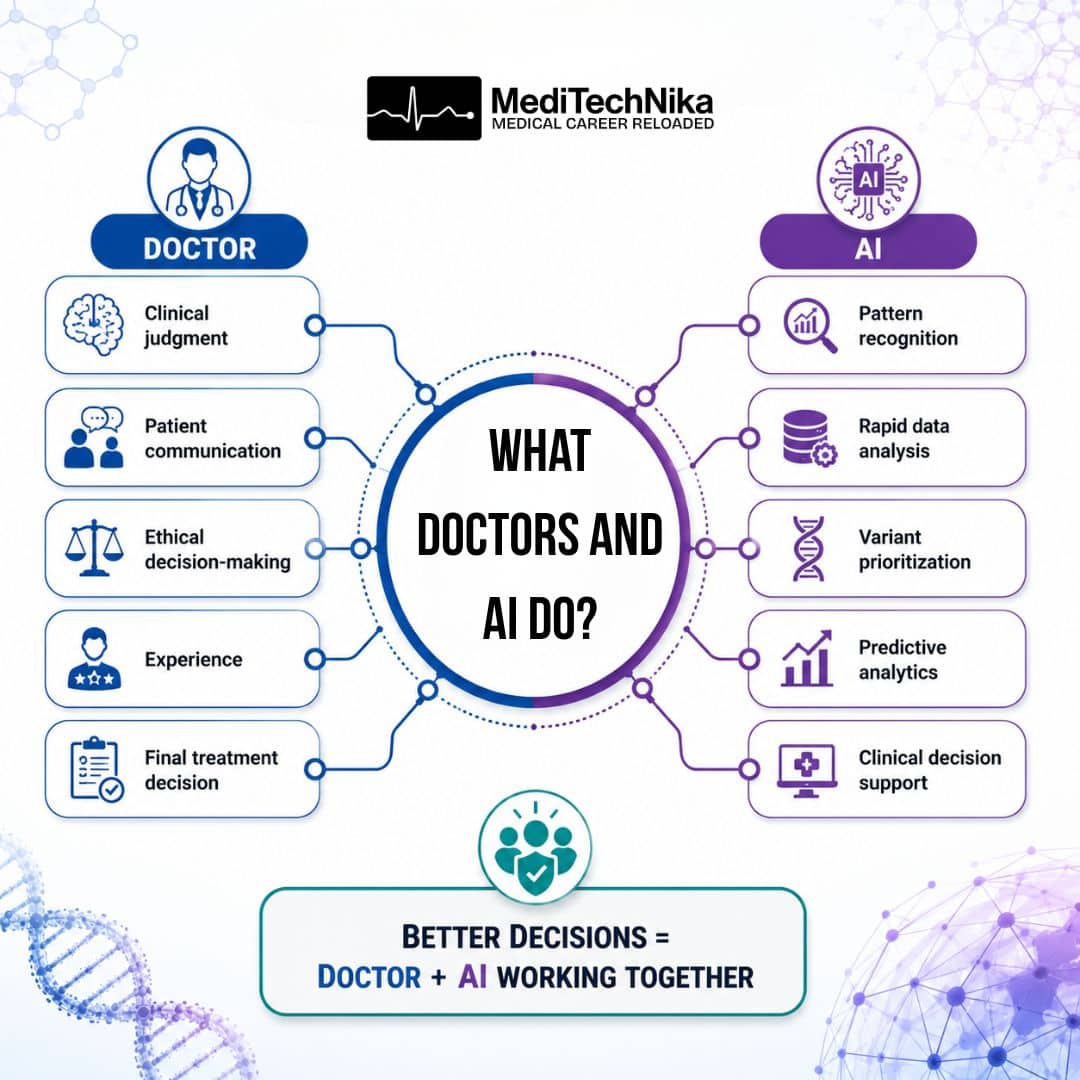
- Human Oversight – AI supports clinical decision-making but cannot replace physician judgement, patient communication, or ethical reasoning.
AI Will Support Doctors—Not Replace Them
One of the major fears related to artificial intelligence is its possible replacement of physicians. This is actually far from being the truth.
Artificial intelligence can easily deal with big data processing in a fast manner. Physicians, on the other hand, can communicate with patients, provide interpretation of clinical information, and make medical decisions. These capabilities work well together. The future of oncology will not be for AI only. It also will not be for medicine without using technologies.
Final Thoughts
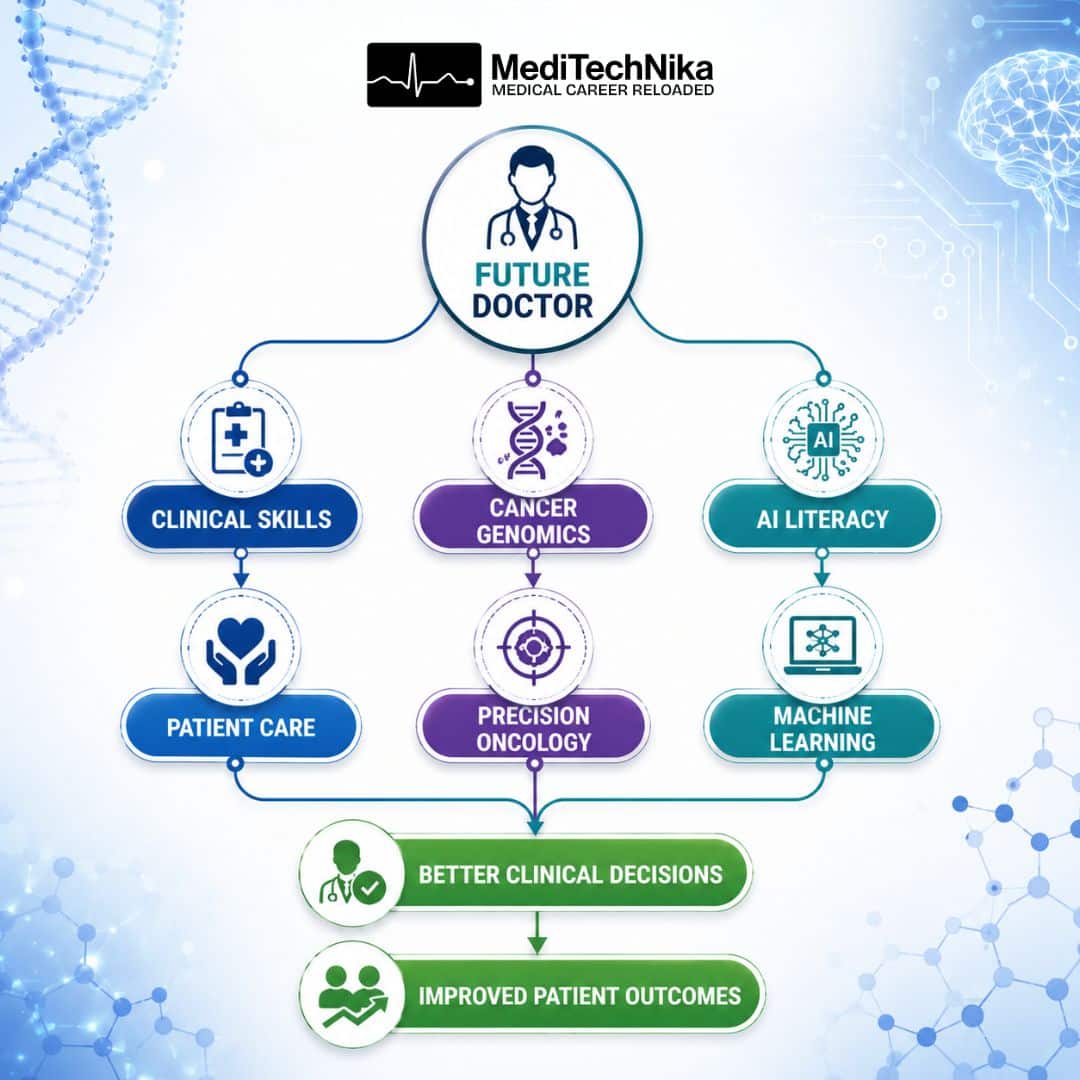
The advent of artificial intelligence has transformed the interpretation of genomic data, identification of biomarkers, and delivery of precision oncology. Although artificial intelligence has the capacity to analyze large amounts of molecular data, the task of interpreting these results clinically and making patient-focused decisions is left to physicians.
The key to being an effective healthcare professional lies not in becoming a coder, but rather in being a more knowledgeable doctor.
Learn AI & ML in Cancer Genomics
If you would like structured, hands-on training, explore our AI & ML in Cancer Genomics Hands-on Training.
The course covers:
- AI Fundamentals
- Machine Learning
- Deep Learning
- Cancer Genomics
- Multi-omics
- NGS Analysis
- Variant Interpretation
- Python for Genomics
- Real Cancer Datasets
- Hands-on Projects
Whether you are a clinician, researcher, or healthcare professional, the program is designed to help you confidently understand how AI is transforming precision oncology.
Frequently Asked Questions
- Can AI replace oncologists?
No. AI assists with analysing genomic and clinical data, but diagnosis, treatment planning, ethical decision-making, and patient communication remain the responsibility of physicians.
- Do doctors need coding to learn AI?
Not necessarily. Most clinicians benefit from understanding AI concepts and interpreting AI-generated insights without writing code. Basic Python knowledge can be helpful for research but is optional.
- How is AI used in pathology?
AI assists pathologists by analysing digital pathology slides, identifying suspicious tissue regions, quantifying biomarkers, and improving workflow efficiency.
- What is the role of AI in cancer genomics?
AI helps prioritise genetic variants, identify clinically actionable mutations, predict treatment response, discover biomarkers, and support precision oncology.
- Is AI useful for surgeons?
Yes. AI supports surgical oncology through imaging analysis, risk prediction, preoperative planning, and integration of genomic information into multidisciplinary treatment decisions.