AI Skin Analysis in Dermatology: From Smartphone Scans to Cancer Detection
Skin problems are common, and almost everyone experiences some kind of skin allergy during their lifetime. Recently, severe conditions like skin cancer have been increasing around the world. But when skin diseases are detected early, treatments become much easier and have higher success rates. This is where technology plays an important role by providing AI skin analysis.
With the help of medical image analysis, computers can now study pictures of the skin and help doctors identify skin problems faster and more accurately. Digital health technology is changing how skin diseases are detected and managed by using AI-powered dermoscopy tools.
But today, AI skin analysis tools not only help doctors but also allow people to monitor their skin from home. These tools are becoming essential for clinical decision support, particularly for detecting early skin cancer.
How was Detection in the Past
Traditionally, the skin was examined by the dermatologist’s eyes and experience. They sometimes used a small device called a dermatoscope, which magnifies the skin and shows more detail. This method works, but it depends on the doctor’s skill and experience.
When two different doctors examine the same skin sample, we might have different conclusions. This made diagnosis less consistent. There were also times when patients often waited longer for a check-up in areas where dermatologists are not easily available.
Skin images can be stored on computers and shared easily with the help of digital health technology, making medical image analysis easier, as computers analyze skin images and support doctors in making better decisions.
Medical Image Analysis
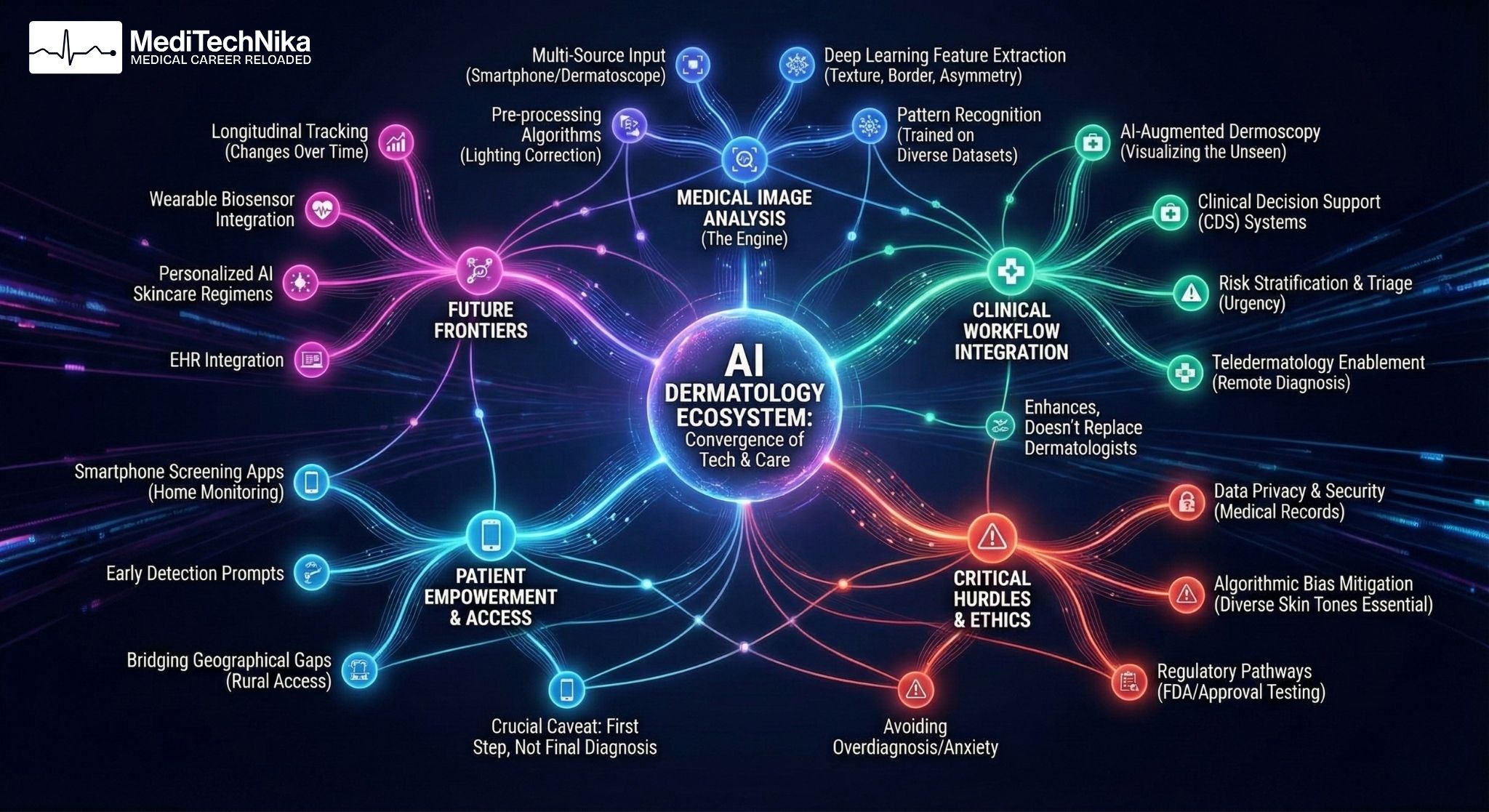
It is a method for studying medical images and extracting useful information using computers. And in dermatology, these images are pictures of the skin or close-up photos of moles and spots. First, an image of the skin is taken using a smartphone, camera, or dermoscopy device. Then the computer improves the image by adjusting the lighting and removing disturbances. After that, it focuses on the areas that look unusual. It also checks other parameters such as uneven borders, size, and texture. These details are among the critical signs of skin infections, particularly skin cancer. The computer gives a result based on what it finds. This process makes AI skin analysis particularly helpful, as computers can detect small changes we might miss.
Smartphones for Skin Checks
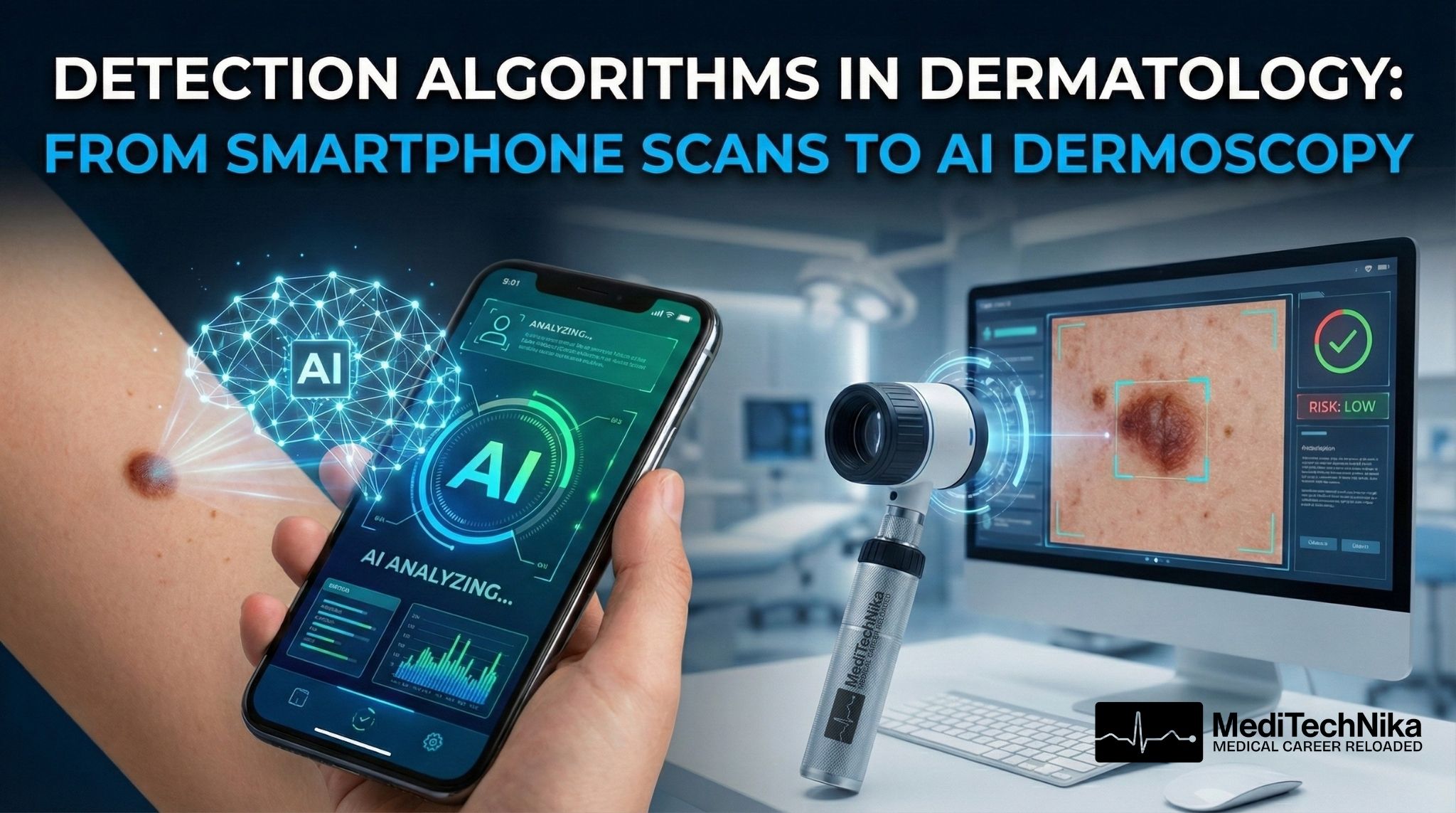
Most of us already carry a smartphone with a high-quality camera, which is powerful enough to support basic skin checks. This also makes skin monitoring easy and accessible. Many apps allow users to take pictures of their skin issues and get instant feedback. Some applications also use small attachments that turn phones into simple dermoscopy tools, giving clear images.
These tools are helpful for some of us living in remote areas or those who cannot easily visit a dermatologist. These scans encourage people to keep an eye on their skin and notice changes early. This is much needed for skin cancer detection. However, smartphone applications are not perfect. The results depend on image quality and lighting. That is why our doctors recommend using these tools as a first step and not as a final diagnosis.
AI Dermoscopy
It is an advanced form of skin analysis. Dermoscopy helps doctors see those details that are not visible to the naked eye. It becomes more powerful when combined with AI. These systems are trained on thousands of authentic skin images, and over time, the AI learns to recognize patterns associated with different skin conditions, such as melanoma and common moles. It is a valuable tool for skin cancer detection as it can be as accurate as experienced dermatologists in identifying risky skin conditions. These are just a part of clinical decision support tools and cannot replace our doctors, but they help them make faster and accurate decisions.
Clinical Decision Support
The Clinical Decision Support tools are designed to help our doctors analyze skin images and provide guidance on risk levels and possible diagnoses. When a dermatologist uploads a skin image, these systems highlight areas of concern and suggest whether further testing is needed. This would save time and reduce the chance of skipping severe conditions. These are mainly used in teledermatology, a method in which doctors examine patients in remote areas. AI tools also help us decide which cases need urgent attention. These systems improve the quality of skin care when human experience and medical image analysis are combined.
Challenges
Although AI skin analysis has many advantages, one primary concern with AI skin analysis is privacy. Skin images are personal medical data and should be stored safely. They should not be disclosed unnecessarily or misused. Another issue is skin tone. AI systems should be trained using images of all skin tones by using diverse data. Regulation of the tools is also essential. The tools used for skin disease detection must be tested and approved before being widely used, as they can cause unnecessary fear or missed diagnoses.
The Future of AI Skin Analysis
Medical image analysis will continue to improve, making AI tools more accurate. In the future, AI will be able to track changes in skin over time and alert users to any risky changes. Wearable devices, telemedicine, and electronic health records will support digital health technology. It might become common for personalized skin care in the future. As technology and regulations become stronger, AI skin analysis will become a trusted part of everyday skin care and medical practice.
Keynote
We see that detection algorithms are changing the way skin diseases are identified and treated. Smartphone scans, advanced AI dermoscopy, and medical image analysis are helping make skin care accurate and easier. With the support of clinical decision tools, doctors diagnose skin problems quickly and confidently. Although challenges remain, careful use of digital health technology will continue to improve skin disease detection and overall skin health. In the coming years, AI-based dermatology may help people look after their skin better and identify issues before they become serious.