

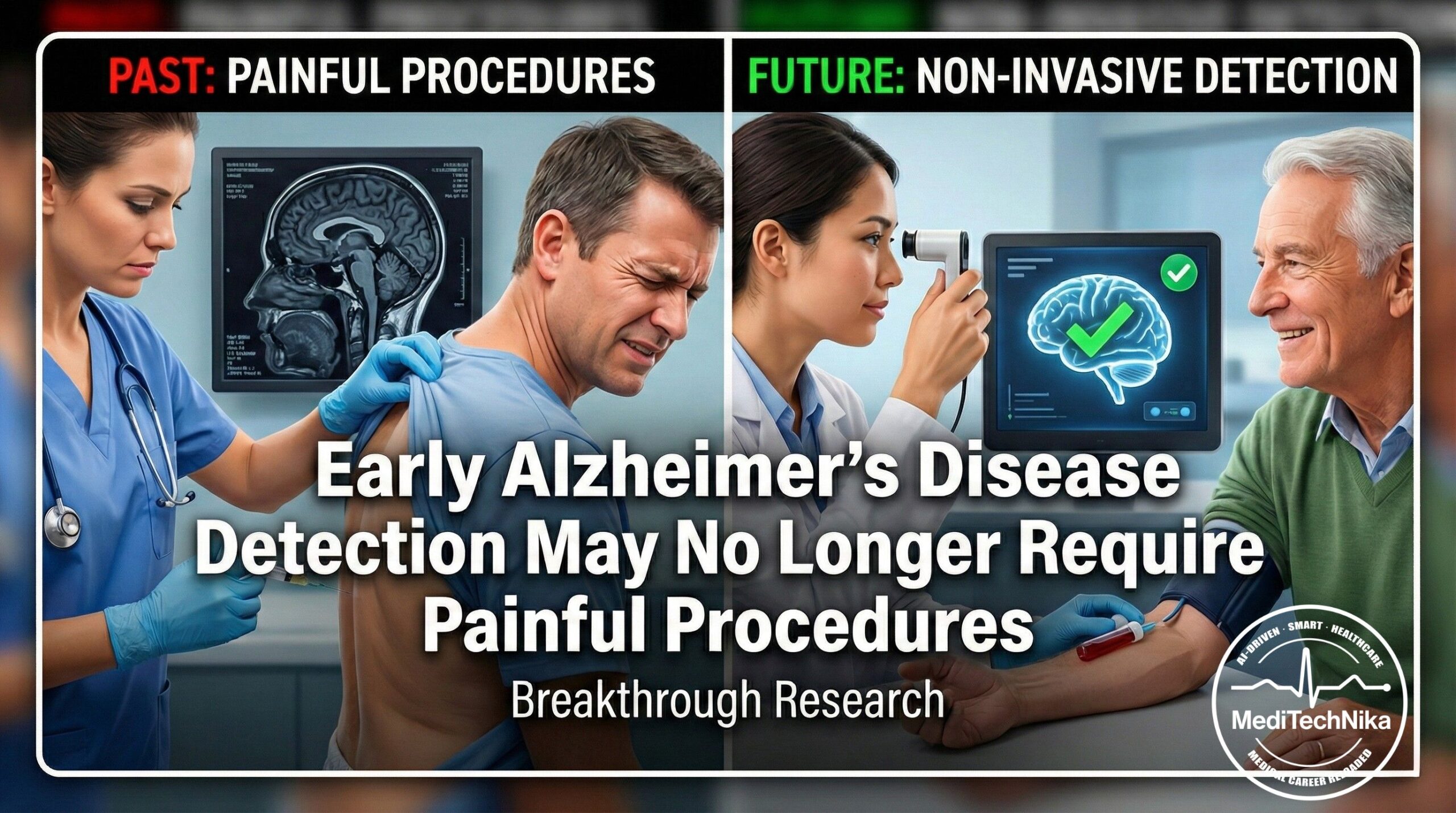
Alzheimer’s Disease Diagnosis Set for a Breakthrough with Blood-Based Biomarkers!
There are blood tests that are cheaper, which could spot Alzheimer’s disease in an early stage. This is intended to be given to more than a thousand adults in an attempt to “revolutionise” how the condition is diagnosed. In this trial, scientists will use the finger-prick tests to detect proteins in the blood linked to the disease.
The current diagnosis practiced in the UK relies on people undergoing mental ability tests, brain scans, and painful lumbar punctures.
This blood test, performed in GP surgeries, gives researchers hope, allowing them to speed up the process. This might allow patients to get treated even before symptoms appear and hold off the onslaught of the illness.
It is estimated that upto three patients with dementia in England are yet to receive a formal diagnosis. This new test is led by the Global Alzheimer’s Platform Foundation (Gap), and LifeArc, with support from the UK Dementia Research Institute (UKDRI).
The Bio-Hermes-002 study says that some 833 of the 1000 people are needed and have already been enrolled globally, including from the UK, US, and Canada. This includes a combination of people with no cognitive issues, with mild cognitive impairment, and some with mild to moderate Alzheimer’s disease. All the volunteers will undergo the current invasive gold-standard tests for Alzheimer’s disease to compare results.
Researchers will analyse blood samples for the biomarkers phosphorylated tau 217(pTau217), Glial fibrillary acidic protein (GFAP), and Neurofilament light polypeptide (NfL).
Studies have shown that proteins called tau and amyloid can accumulate in the brain for over 15 years before it starts to display symptoms of Alzheimer’s, which is the most common form of dementia.
The director of strategy and operations at LifeArc, Dr. Giovanna Lalli, said: “Over the last five years, there has been substantial progress in identifying blood-based biomarkers to identify people at high risk of developing Alzheimer’s disease before their symptoms present”.
She also mentioned, “Developing cheaper, scalable, and more accessible tests is vital in the battle against this devastating condition. We are committed to improving patient lives through the development of new tests and treatments.
“We are excited about the prospect of a finger-prick blood test for Alzheimer’s disease because it will allow more patients to access new drugs, currently being developed, to slow disease progression in its early stages”.
Professor Henrik Zetterberg, lead of the biomarker factory at the UK Dementia Research Institute, added: “This study is unique in its size and scope, with 30 per cent of volunteers being recruited from under-represented groups.
“Importantly, the results will be compared against current gold standard diagnostic techniques. If successful, being able to diagnose Alzheimer’s with a minimally invasive, cost-effective method will revolutionise diagnostics in this area and pave the way for improved diagnosis of all neurodegenerative conditions.”
Dr Michael Sandberg, a GP from London, took the test after seeing the impact of Alzheimer’s on his mother, Aline. He said, “I saw the Bio-Hermes-002 trial, and it really excited me.
“I was delighted to find out that my test result was negative, and it’s a huge relief knowing what my mother went through.
“Being able to screen people to see if they are on the way to developing dementia without hugely expensive scans and lumbar punctures is going to be fundamental if we are to fulfil the potential of new treatments and develop simple and cost-effective tests.”
“Getting an accurate diagnosis takes far too long in the UK”, said Professor Fiona Carragher, chief policy and research officer at the Alzheimer’s Society.
She added: “With new treatments on the horizon, early and accurate diagnosis must be a priority for the NHS. That’s why we’re funding work to bring blood tests for dementia to the NHS, so everyone who would benefit from a diagnosis can get one quickly and accurately.”
John Dwyer, president of Gap, said: “Using a simple blood test has the potential to revolutionise diagnosis by making a timely diagnosis accessible to more people, including those who have limited access to specialised healthcare.”
The trial is expected to be completed in 2028. An estimate of 944,00 people in the UK are living with dementia. Alzheimer’s disease affects around 6 in 10 people with dementia.
Thinking and reasoning difficulties, memory problems, and language problems are very common early symptoms of the condition, which worsen over time.
While you cannot completely prevent dementia, making healthy choices, especially between the ages of 40 and 65, can significantly lower the risk. Here are a few steps you can take to protect your brain:
Lifestyle Choices:
- Stay Active: Regular exercise keeps your heart healthy and helps you maintain a healthy weight.
- Limit Alcohol: Try not to drink more than 14 units a week (roughly one small drink per day). Too much alcohol can damage your brain.
- Stop Smoking: Smoking harms blood flow to the brain and lungs.
- Stay Social: Spending time with others improves your mood and reduces the stress linked to dementia.
Health & Safety:
- Manage Medical Conditions: Keep health issues like diabetes, high blood pressure, and high cholesterol under control.
- Protect Your Senses: Get your eyes and hearing checked regularly, as losing these senses is linked to a higher risk of dementia.
- Wear a Helmet: Protect your head from injuries, as brain trauma can lead to the buildup of harmful substances in the brain.


