How Emerging Health Technologies Are Changing Clinical Practice
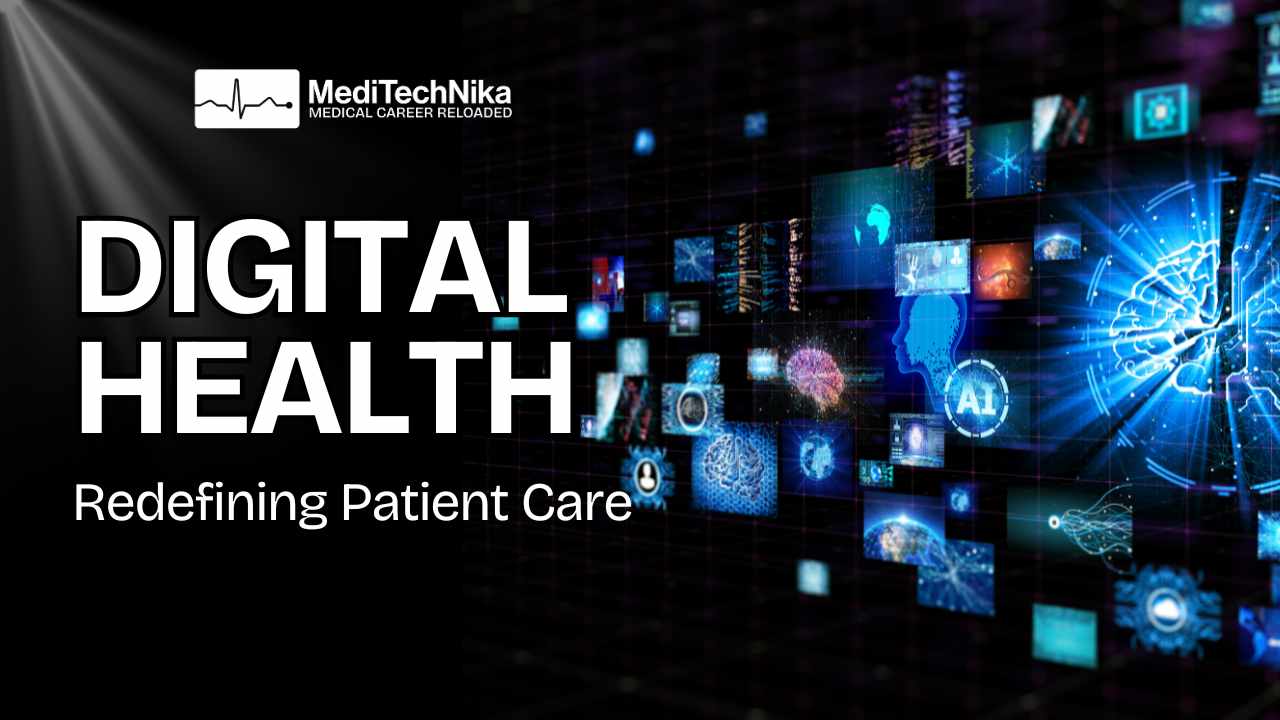
Healthcare is changing very fast. By 2026, the way doctors diagnose, treat, and interact with patients will be transformed through digital health, AI in healthcare, and next-generation technologies. For the graduates who are stepping out of the medical world, digital health may not be just a skill to add, it is becoming a huge part of medical practice. Want to know something exciting? It is not necessary that you have to be a tech-head or a coder for this, you just need the right curiosity and willingness to use smarter and better tools to thrive in this era of healthcare innovation.
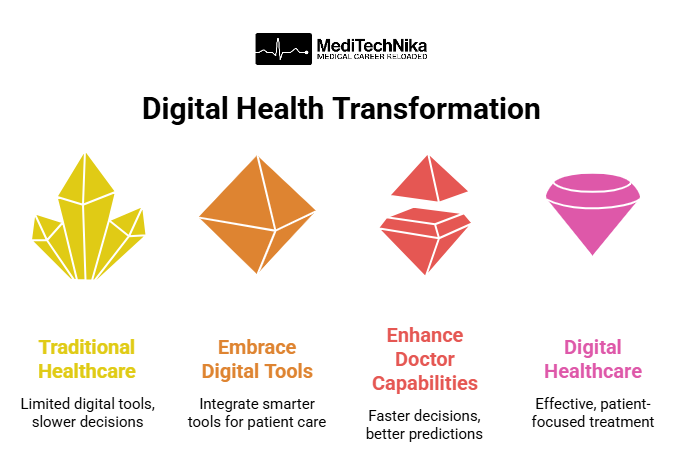
Digital health in 2026 is not about replacing doctors. It is more about providing the superpower to them to make faster decisions, right predictions and give more time for patient interaction.
Let us now learn about the major digital health trends that is changing the way we treat patients and also learn about why this matters for the next generation of doctors.
1. AI as a New Diagnostic Partner: The Future of Healthcare Innovation
Be it reading the scans, predicting the risks of the diseases, and screening for diseases, AI in healthcare is already helping doctors in every aspect. It will now soon shift from being just a helpful gadget to being a reliable partner in disease diagnosis by 2026.
Imagine:
- AI is pointing out the minor abnormalities in X-rays, CTs and MRIs
- Detecting the early signs of sepsis hours before the symptoms appear
- Digital assistants summarising the patient history within seconds
This does not mean that AI will replace radiologists or physicians; it will just reduce the errors, speed up the reporting process and save time, which will be used for manual documentations. Medical graduates who possess the knowledge on how to use AI diagnostic tools are in high demand in the current industry especially in departments like radiology, pathology, internal medicine and emergency medicine.
2. Growing Shift Towards Virtual Care As a Standard Practice
Telemedicine is evolving now. For example, eSanjeevani completed more than 20 crore teleconsultations and is still expanding.
What would virtual care look like in 2026?
- Uniformly segregated dashboard consisting of lab, vitals, imaging and wearable data
- Automated follow-up reminders and consistent monitoring
- Hybrid patient care models and in-person care
Why does this matter?
Virtual OPDs will reduce the patient load, provide continuous support, and reduce the risk of hospital-acquired diseases.
3. Personalized Medicine Powered by Digital Health Analytics
With the increase in the amount of clinical data storage and AI analytics, treatment plans will move towards personalised medicines very soon.
How does personalization work?
- The algorithms will integrate the imaging, genomics, wearables and lifestyle data
- Personalized treatment protocols will guide the choice of medicine and its dosage.
- Patient response will be monitored and care instructions will be modified accordingly
Why does this matter?
Real time monitoring will help in early detection, better and earlier treatments and will improve the long term treatment of diseases.
4. AI in Healthcare Driving Growth of Digital Therapeutics (DTx)
Digital therapeutics is rising in global scale, including in India. India is also seeking clinical validations for digital mental health, management of diabetes, and rehabilitation programs.
Applications of DTx Include:
- Cognitive Behavioural Therapy-based programs for insomnia and anxiety-related issues
- Digital platforms for diabetes management
- Sensor-based feedback is administered for stroke and orthopedic rehab apps
Why does this matter?
DTx lets clinicians monitor progress remotely and intervene between hospital visits, strengthening remote patient monitoring.
5. Wearables Evolve Into Continuous Remote Patient Monitoring Tools
The wearables will transition from wellness devices to clinical sensors. Tools like Dozee are already providing AI based monitoring systems in Indian hospitals.
By 2026, wearables will track:
- Continuous blood pressure
- Oxygen saturation in blood
- Heart rhythm
- Sleep cycles and respiratory trends
- Stress levels
Why does this matter?
This level of remote patient monitoring will help in early detection and improve the long term disease treatments.
6. Robotics in Routine Clinical Care
Robotics will emerge beyond the hospital rooms to daily hospital tasks.
Applications in India and on a global scale:
- Robotic-assisted surgery in medical centres like Apollo and Medanta
- Robotic nurses moving supplies or providing assistance with vitals
- Rehabilitation robots supporting neuro and orthopaedic recovery
Why does this matter?
Robotics reduces human error, improves precision, and eases clinical workload, fuelling major healthcare innovation.
7. Hospital-at-Home Enabled by Digital Health Technologies
With remote monitoring devices easily available, the care that is delivered at hospitals can be provided feasibly at home.
Examples:
- Remote IV antibiotic administration
- At-home telemetry using wearable ECG patches
- Virtual physiotherapy and respiratory care
- Smart devices that measure vitals continuously
Why does this matter?
This service provided by digital technologies will reduce the expense at hospitals, lower the infection risks and ensure the comfort for the patients.
8. Interoperable, Intelligent, and Connected EHR Systems
By 2026, the electronic health record platforms will become more spontaneous, consistent, and AI-driven.
The ABDHM/ABDM (Ayushman Bharat Digital Mission) is speeding up this process in India through unified health IDs.
Features of next-generation EHRs:
- One health ID across hospitals and providers
- Automated integration of labs, imaging, and prescriptions
- AI-assisted note summaries and coding
- Faster documentation with fewer errors
Why does this matter?
Clinicians will get more time for real patient interaction and less burden.
9. Digital Mental Health as a Core Element of Care
Digital health solutions are rising for mental health, driven by increasing stress among patients and clinicians.
Tools include:
- AI-driven mood and behaviour checks
- Digital CBT apps
- Virtual psychiatry and psychology services
- Chatbots for early grouping and crisis support
Why does this matter?
This will improve access and help in earlier diagnosis.
10. Strengthened Cybersecurity in Digital Health Systems
As the adoption of digital systems increases, hospitals and start-ups are focusing on cybersecurity investments.
Key initiatives:
- Encrypted data exchange
- Secure cloud infrastructure
- Biometric/2FA authentication
- AI-driven threat monitoring
Why does this matter?
Patient trust depends on secure systems, especially in a highly digital clinical ecosystem.
What Does This Mean for Medical Graduates?
The shift toward digital health is already happening. For new doctors, this would mean:
- Becoming comfortable with AI-enabled decision support
- Using telemedicine and hybrid care models confidently
- Understanding wearable data and digital biomarkers
- Working with interoperable EHRs
- Applying digital therapeutics for chronic conditions
- Joining hospitals and start-ups actively adopting digital health ecosystems
You don’t need technical expertise, just the willingness to integrate digital tools into clinical reasoning and patient communication.