
Future of Healthcare: Emerging Specialisations for 2026
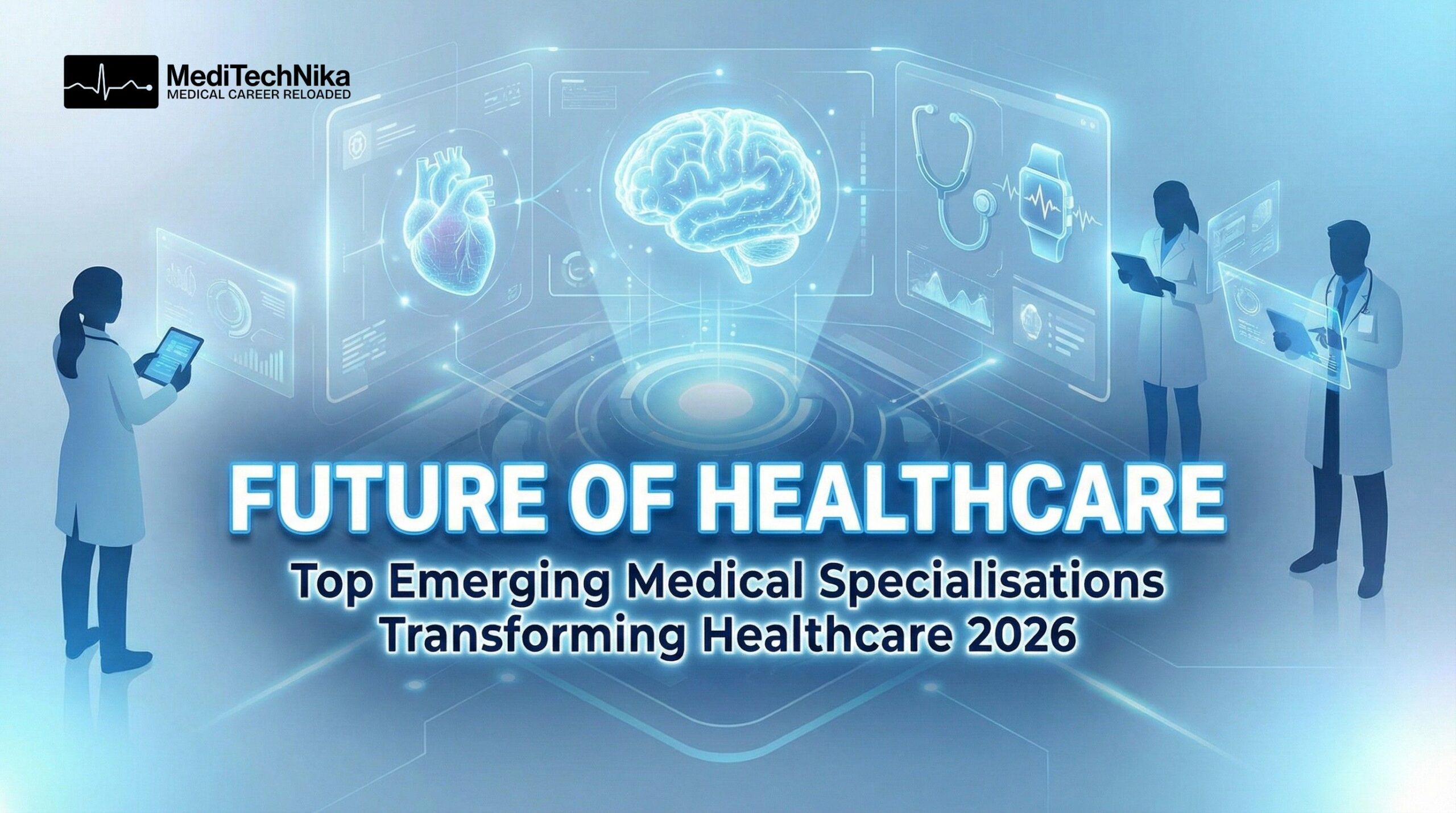
Future of healthcare is looking different from the healthcare we knew a few years back. The launch of new technologies, increasing diseases, and demand for convenience from patients have pushed medicine into a completely different zone. Remote patient monitoring and artificial intelligence in healthcare are not just options; they are an essential part of modern healthcare.
There are a few medical specializations that are evolving and transforming what it means to be a clinician in this digital world. These roles will not eliminate traditional medicine, but they will help in supporting it and making it more precise and proactive.
AI and machine learning in healthcare are rapidly evolving areas with new job opportunities transforming healthcare trends.
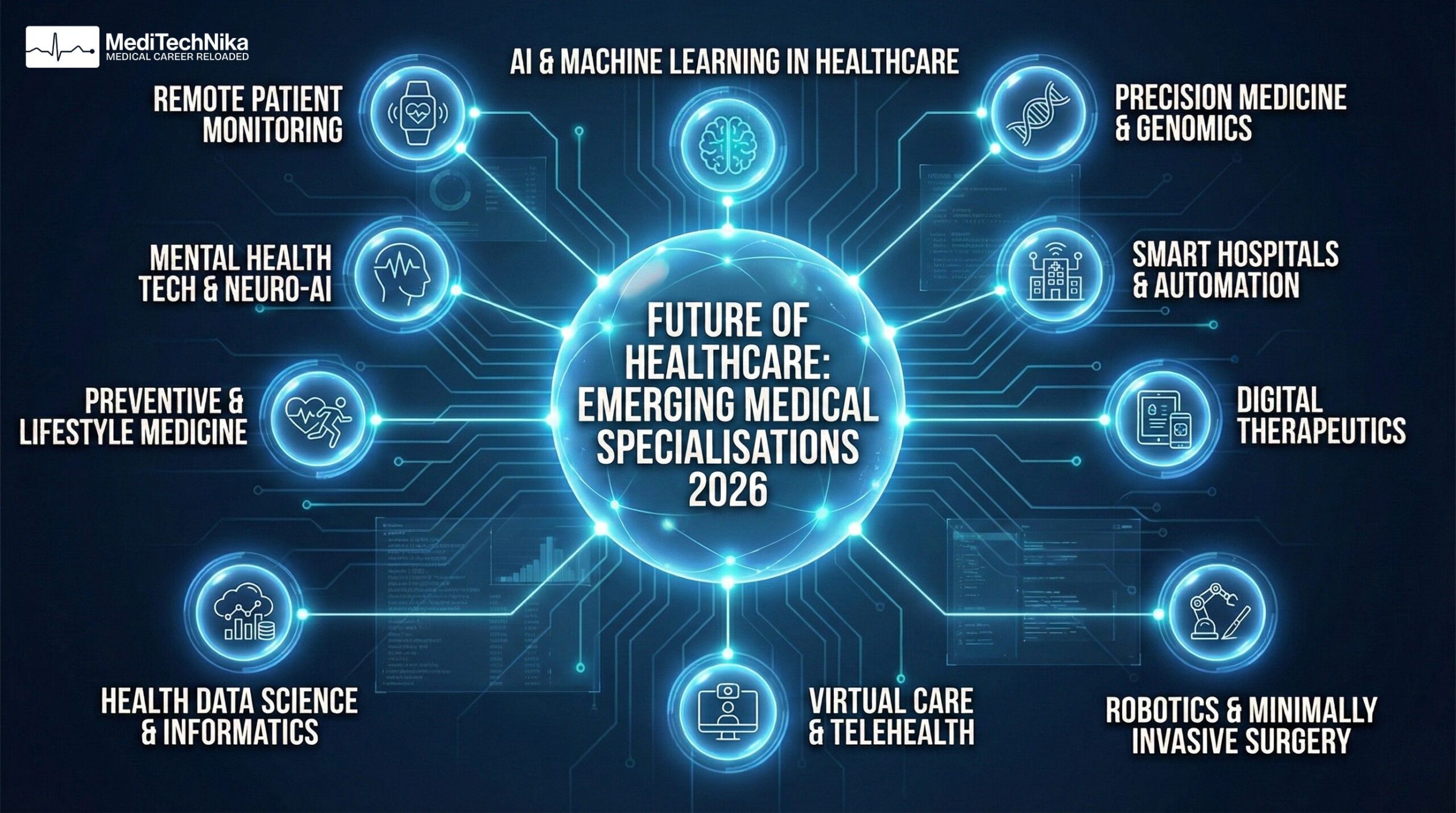
Let us see what the top specialisations are that are transforming healthcare.
-
Remote Patient Monitoring (RPM) Specialist
If there is any one specialization that is growing rapidly in healthcare trends, then that is remote patient monitoring. As we can notice that there is a rise in chronic diseases, aging populations, and home-based care systems, hospitals are now mostly relying on remote patient monitoring specialists to monitor patients outside the clinical workspace.
Moreover, patients are more comfortable receiving care at home, especially after the pandemic. RPM specialists now have an option to work closely with cardiologists, emergency physicians, endocrinologists, and telemedicine teams to make sure everything works seamlessly before a crisis takes place. -
AI-Augmented Clinical Decision Specialist
The future of healthcare, especially the incorporation of artificial intelligence, is not now only to one particular field or specialization; it is now integrated into various fields like radiology, cardiology, and sepsis prediction models (predictive analytics).
Still, technology needs someone who can understand both medicine and machine learning and integrate them wherever needed. This role is involved in evaluating whether the AI models are safe to use clinically, ensuring ethical and unbiased performances, and they are also involved in training health staff on how to use AI tools. This involves AI and machine learning in healthcare, making work easy and effective.
-
Medical Data Scientist/Healthcare Analyst
Data is one of the important things to be considered in healthcare, and it plays a crucial role in healthcare. Hospitals are still struggling with the unstructured and unorganized information from lab reports, imaging systems, wearable devices, and electronic health recorders.
A medical data scientist helps to convert all this messy data into insightful data for the clinicians to make the workflow easier. They work on predictive models and operational analytics, making this specialization a backbone for smart hospitals. The future of healthcare majorly depends on this particular role.
-
Digital Therapeutics Specialist
Digital therapeutics is now a branch of medicine. A digital therapeutics specialist helps in integrating the apps and digital tools into the treatment plans. They monitor and interpret the data that is generated by the apps. This is a perfect field for clinicians who are interested in research and technology. The future of healthcare is going to be completely dependent on digital platforms to reduce the burden and make things easier.
-
Precision Medicine & genomic care consultant
Precision medicine now plays an important role in healthcare trends; especially by 2026, it can move from academic research to routine clinical care. Clinicians are trained in molecular diagnostics and genomics to make personalized treatment strategies. They also play a role in explaining or answering queries like which medication will work best for the patient.
-
Virtual Care & Telehealth Physician Specialist
Virtual physicians are trained to manage chronic illness remotely, conduct digital follow-ups, and coordinate with patients in hybrid mode. Telemedicine specialists are essential for reducing hospital load and making patient care effective.
What This Means For The Future of Healthcare
The biggest transformation in healthcare is not just about the new jobs; it is about the new philosophy. Healthcare is now becoming more predictable with new technologies and advancements without any restrictions, mainly with the help of artificial intelligence
As technology in healthcare is becoming standard, those who understand and master these tools will lead the next generation of medical transformation and healthcare.