
How Wearable Biosensors Are Transforming Disease Detection
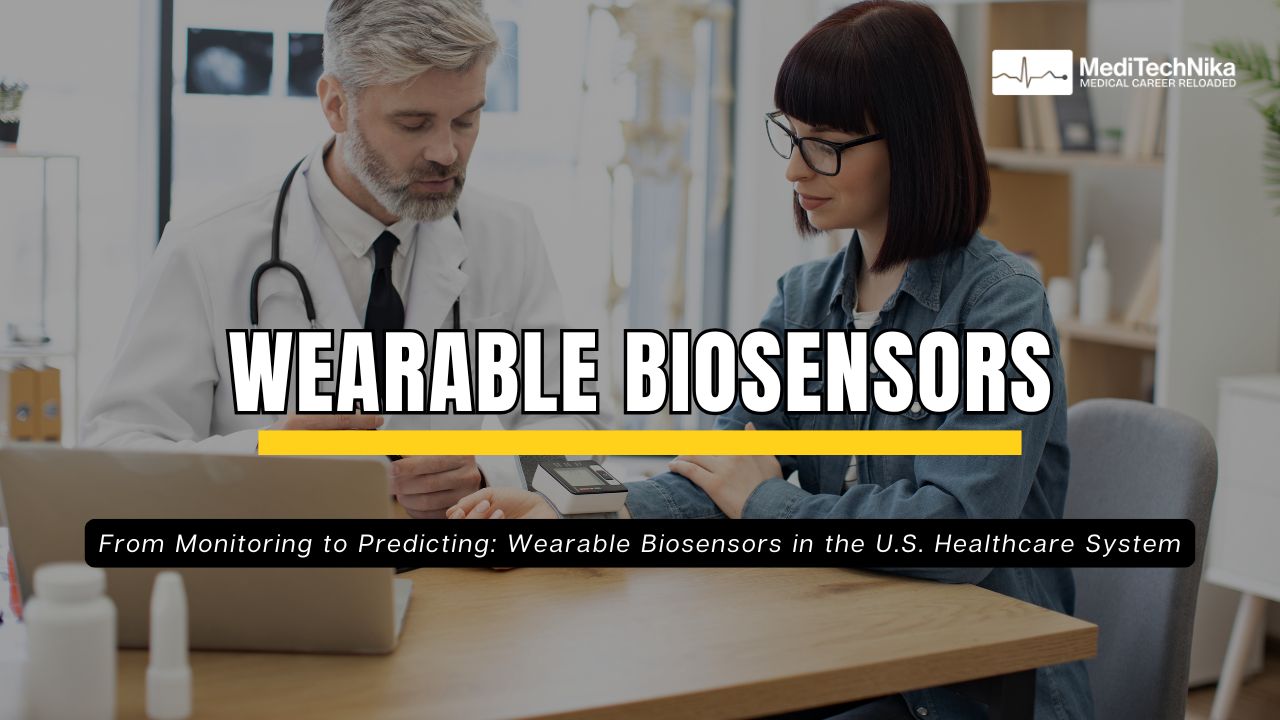
Wearable Biosensors: The U.S. healthcare system is undergoing a powerful transformation. Amongst these trends and advancements, wearable biosensors are the centre of attraction and a novel improvement in the field of healthcare. It started as a simple fitness tracker and has now been transformed into a biosensor technology.
It is now used for the early detection of diseases, infections, and abnormalities, along with metabolic risks, even before the symptoms appear. This transformation marks an important milestone for clinical experts, digital health professionals, and health-tech innovators, both in the U.S. and India, where health monitoring is continuous and personalized.
Wearable biosensors are not just gadgets; they are the tools that are reshaping the entire healthcare system with the help of patient monitoring programs across U.S. hospitals. This article helps you to understand why the U.S. has rapidly adopted these advanced wearable biosensors, how the detection of diseases is improving, and what opportunities this will create globally for healthcare professionals.
What Exactly Are Wearable Biosensors?
Wearable biosensors are the type of sensors that are small, non-surgical devices that are used to track the real-time biochemical, mechanical, and physiological signals. Unlike electronic devices that are worn on the body, like smartwatches, fitness trackers, and smart rings, which are used to track basic vitals, wearable biosensors are used in medical-grade settings for reliability and also require FDA approval for use.
Modern sensor technology can monitor the electrical signals, respiratory patterns, temperature fluctuations, inflammatory patterns, and cardiac patterns. These sensors are used to convert the biological signals into meaningful information for the clinical experts, researchers, and the patient monitoring team. This makes things easy because there will be continuous health monitoring instead of occasional visits to the clinic.

How Wearable Biosensors Improve Disease Detection in the U.S.
-
Early Detection Through Continuous Monitoring
Diseases, especially chronic diseases, progress silently. By the use of these wearable biosensors, health systems can easily tackle minor changes in the human body
Examples:
- Wearable biosensors like ECG patches are used to detect atrial fibrillation with accuracy.
- Continuous glucose sensors are used to monitor real-time metabolic patterns. Most commonly used in Diabetes management.
- Biosensors are also used to detect chronic obstructive pulmonary disease (COPD) or post-COVID complications. This is most commonly used for respiratory disorders.
- For early viral infection detection, temperature-based and HRV-based biosensors are used, especially for infection risk management.
This real-time monitoring of data allows U.S. hospitals to intervene earlier and reduce unnecessary admissions and adjustments to personalized treatments.
-
Biosensor Technology Paired with AI and Clinical Algorithms
It empowers healthcare systems when combined with AI-powered analytics. Machine learning and artificial intelligence algorithms continuously monitor patient data and identify irregular patterns, stress responses, behavioural abnormalities, oxygen levels, and sleep patterns associated with chronic conditions.
-
Seamless Integration With Remote Patient Monitoring (RPM)
The growth of remote patient monitoring in the U.S. has been explosive, which is supported by strong compensation structures and federal encouragements. These programs are strongly based on medical-grade wearable biosensors and now monitor patients with hypertension, heart failure, diabetes, chronic respiratory conditions, and post-operative recovery. This enables real-time monitoring from home to hospital dashboards by redefining outpatient care. This makes it more accurate and more scalable.
Real-World Impact in U.S. Hospitals and Health Systems
Companies like Mayo Clinic, Cleveland Clinic, and Kaiser Permanente are using biosensors for everything from surgery to chronic disease management programs. A few hospitals also reported that after the implementation of biosensors, there were reduced re-admissions of patients.
Clinical Benefits Reported Include:
- Faster detection of clinical deterioration
- Reduced emergency visits for high-risk patients
- Better medication improvements based on the continuous patterns
- Improved patient engagement
The world’s largest healthcare provider—the U.S. Department of Veterans Affairs—actively uses remote monitoring and biosensor-based monitoring for better chronic disease management.
Biosensors allow to detect the early outbreaks, disease patterns, and the management of chronic infectious diseases for public health.
Regulatory Landscape and Validation: Why Biosensors Must Meet High Standards
In the U.S., biosensors for clinical use must meet the strict guidelines and primarily should get approval from the Food and Drug Administration (FDA). FDA approval and clearance are mandatory for medical devices, especially biosensors, to diagnose, treat, and guide medical decisions.
Devices must be tested for accuracy and validation. Validation includes real-world evidence, trial data, and post-market surveillance. Data security and privacy are equally critical, and biosensors used to transmit data to remote patient monitoring platforms must protect patient privacy.
Opportunities for Healthcare Professionals & MedTech Innovators
The rapid adoption of wearable biosensors in the U.S. is now opening numerous opportunities for healthcare professionals and medtech innovators worldwide. Biosensors are now integrated with AI and machine learning for early disease detection, chronic care.
- The healthcare industry demands biosensors that offer higher accuracy, multi-functionality, skin safety, and seamless integration with AI.
- Growth in Remote Patient Monitoring Ecosystems: There is a need for clinical specialists, workflow designers, digital health analysts, and RPM program managers as the RPM continues to scale across hospitals.
- Wearable sensors now deliver real-world impact and integrate with AI-powered analytics, opening new opportunities for AI researchers, biomedical engineers, and data scientists. The primary focus area includes predictive analytics, early-warning scoring systems, and real-time disease detection systems.
- Clinical Implementation & Workflow Transformation: Healthcare systems need specialists who can understand both clinical and digital technologies. This combination of clinical care and digital innovation will bring major growth in the coming years.
- Global Collaboration & Cross-Border R&D: The U.S. is constantly partnering with global universities, institutions, research labs, and medtech companies. This enables testing of new biosensor materials, conducting clinical trials, and co-develop FDA-ready devices.
Challenges and Barriers: What Still Needs to Be Solved
As there are a lot of advantages of biosensors, simultaneously, there are a few challenges that are addressed.
- Data overload for healthcare experts
- Accessibility
- Accuracy
- Integration into clinical workflows
Despite these challenges, the motivation towards biosensor-driven healthcare is strong and is accelerating every year.
The Future: A Unified Biosensor Ecosystem for the U.S. and Beyond
The next generation of wearable biosensors will include AI-powered predictive disease models, smooth clinical documentation, smart monitoring, multi-functional chemical sensors, and integration with telemedicine.
The rise of wearable biosensors is more than a technology advancement, and it is a fundamental shift in how the U.S. detects diseases, manages chronic care, and supports patients beyond the walls of hospitals.