


Needle-Free Insulin Gel for Diabetes Treatment
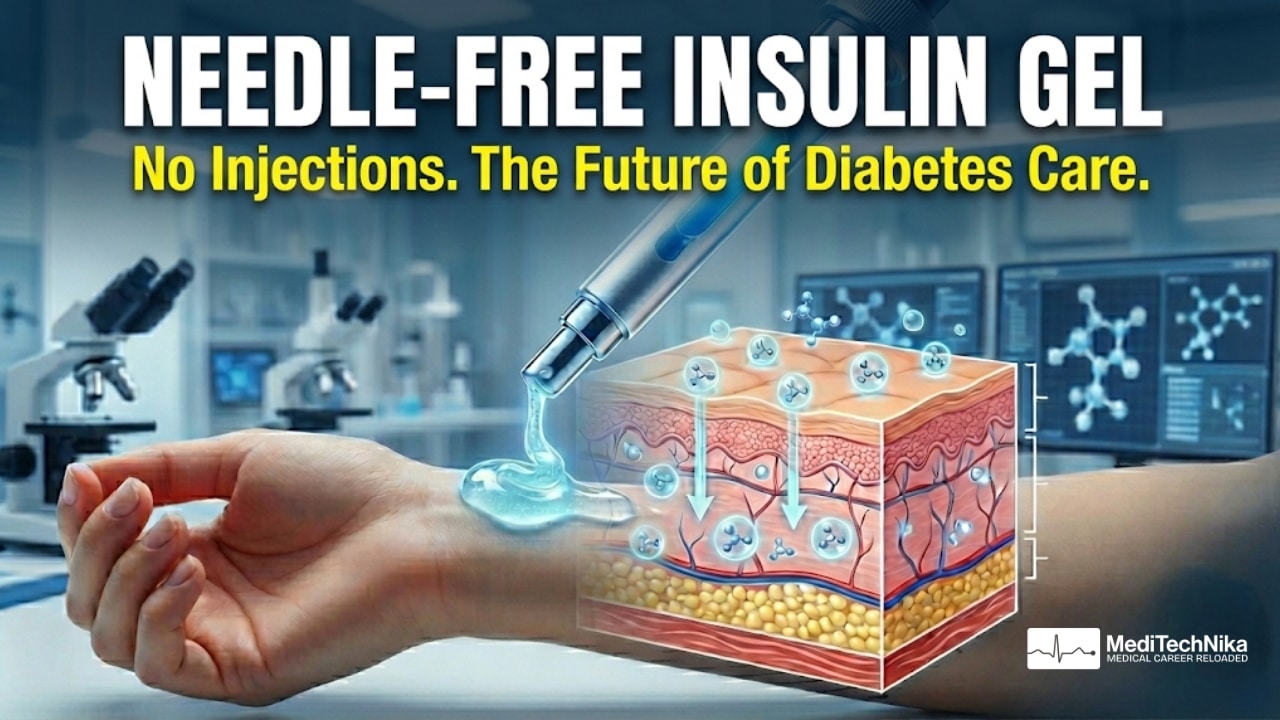
Daily injections are a routine work in life for most diabetic patients today. A new discovery may now change this. Researchers have now developed a needle-free insulin gel that can deliver insulin through the skin without using any syringes. Animal studies show that this new discovery can help diabetic patients by being an alternative to injections.
This study has shown good results when tested on mice and pigs, proving that this can become helpful to patients worldwide.
How Does this Needle-Free Insulin Gel Work?
The researchers faced a lot of complications and challenges in this discovery, and the major one was the skin itself. The outer layer of skin acts as a strong barrier by preventing larger molecules from entering.
Researchers developed a special polymer that responds according to the pH changes in the skin.
This is how the gel works:
- The surface of the skin is slightly acidic
- The polymer becomes positively charged in such an environment
- This makes the polymer stick to the fatty layer in the skin
- As it moves deeper into the skin, it changes its charge as the pH becomes more neutral
- This allows the polymer to pass through the skin while carrying insulin.
Insulin cannot pass through the skin barrier without this polymer, and this smart research design makes it possible.
What Were the Results in Animal Tests?
In diabetic mice, a single application of the gel lowered blood sugar levels within about one hour. Blood glucose stayed in a healthy range for nearly 12 hours after application.
However, researchers had to use a high insulin dose in mice to achieve these results.
More promising results came from miniature pigs, whose skin is very similar to human skin. In pigs:
- A lower dose was needed.
- Blood sugar returned to normal levels.
- Repeated use did not cause skin irritation.
These findings suggest that needle-free insulin could work in humans, but human trials are still needed.
Could Needle-Free Insulin Replace Daily Injections?
It’s too early to say. While the early results are encouraging, this treatment has only been tested in animals so far. Human skin differs in thickness, fat content, and other factors. Researchers must confirm that the gel is safe, effective, and properly dosed for people.
There are also safety concerns to address:
- Too much insulin can cause dangerously low blood sugar.
- Long-term use of the polymer must be proven safe.
- The right human dosage must be carefully determined.
Before needle-free insulin becomes available to patients, it must go through clinical trials and receive regulatory approval.
Why Does This Discovery Matter?
If successful in human trials, needle-free insulin could:
- Reduce the discomfort of daily injections
- Help patients who fear needles
- Improve treatment adherence
- Offer steady blood sugar control for up to 12 hours
However, patients would likely still need fast-acting insulin during meals to control sudden blood sugar spikes. This gel may serve as a long-acting or background insulin option rather than a full replacement for all injections.
Beyond Insulin: A Bigger Opportunity
Scientists are also exploring whether this technology could deliver other injectable medicines, including GLP-1 drugs like semaglutide. If successful, the same system could reduce the need for needles in several treatments.
The Future of Diabetes Care
The development of needle-free insulin marks an exciting step forward in diabetes research. While more testing is needed before it reaches pharmacies, the idea of controlling blood sugar without injections is no longer just a dream.
For now, patients should continue following their prescribed treatment plans. But if research continues to succeed, needle-free insulin may one day make diabetes care simpler, less painful, and more convenient for millions around the world.