

Cancer Clinical Trials Made Accessible With Mount Sinai’s AI Tool
Cancer remains one of the biggest health challenges worldwide. According to global health estimates, about 1 in every 5 people develops cancer in their lifetime. While treatment options have been improving steadily, researchers emphasize that continued progress depends heavily on cancer clinical trials to develop better therapies and more effective treatment plans.
Cancer Clinical Trials
Clinical trials play a significant role in the development of new cancer treatments. These trials help in testing new drugs, therapies, medical devices, and treatment plans before they are available in the market. Despite all the cancer-related trials that are happening every year, only 7% of cancer patients take part in these.
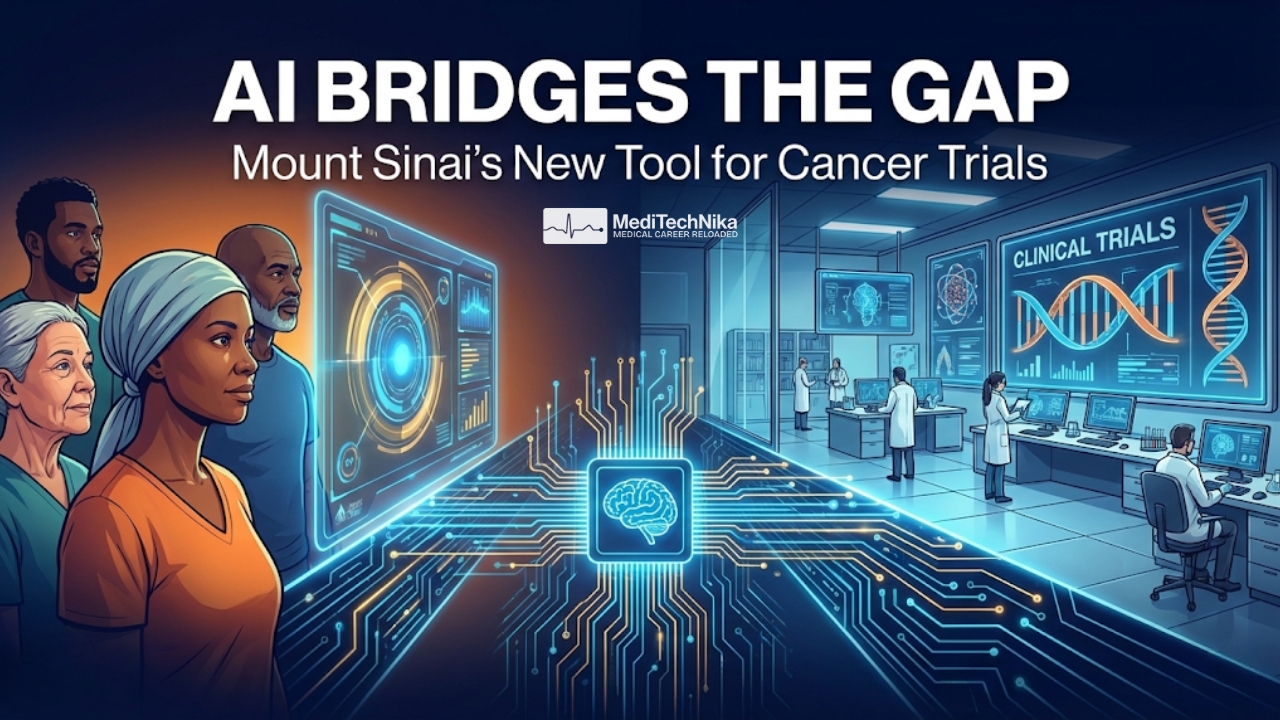
A new initiative from Mount Sinai Tisch Cancer Centre (TCC) aims to change this by using artificial intelligence to help cancer patients more easily connect with clinical trials.
Why Do Many Patients Miss Cancer Clinical Trials?
Clinical trials are essential for medical progress, but many patients never take the opportunity for several reasons. Many patients are not aware that clinical trials exist and how they work. A few reasons also include transportation issues, time constraints, or financial concerns. In many cases, doctors may not be aware of ongoing research.
Around 10,000 new cancer patients are seen every year at Mount Sinai Health Systems alone, but less than 10% have enrolled in clinical trials.
According to Dr. Karyn Goodman, a Professor and Vice Chair of Clinical Research in the Department of Radiation Oncology at the Icahn School of Medicine at Mount Sinai, many patients have missed their opportunity due to limited awareness. She also said that many patients and physicians think that they might not be eligible for the clinical trials that are being conducted.
A New Platform that Would Bridge the Gap
To address this problem, Mount Sinai Tisch Cancer Center has launched a new digital platform designed to connect cancer patients with clinical trials in a better way.
The platform developed by healthcare technology company Triomics helps identify individuals who can participate in ongoing cancer studies by reviewing the patient data from electronic medical records.
Instead of relying only on manual record checks, the system helps highlight possible matches faster.
Dr. Goodman explained that identifying trial-eligible patients has traditionally required significant time and effort from research teams. Staff often have to manually review schedules and medical histories, which can lead to delays and missed matches.
The new platform reduces this workload and allows doctors to have more timely information about trial options for their patients.
Supporting the Doctors and Improving the Patient Care
Doctors can now discuss the options with patients by speeding up the process of finding suitable clinical trials. This is very much necessary as treatment decisions are quickly made after the diagnosis.
With better access to information, patients can learn about cutting-edge treatment options they may not otherwise hear about. For doctors, it means fewer missed chances to offer advanced therapies.
Experts say this kind of system does not replace medical judgment but supports it, making the trial-matching process more consistent and efficient.
Improving Access and Equity in Cancer Research
Another major goal of the new platform is to improve fairness and access in clinical trial enrollment.
Clinical trials often struggle to include patients from diverse backgrounds. Barriers such as limited awareness, uneven referrals, and resource constraints can prevent many eligible patients from participating.
By automatically identifying potential matches, the platform may help increase participation across different populations. This could lead to more inclusive research and better data for future treatments.
Dr. Goodman noted that while running clinical trials requires resources, tools like this can make screening more efficient and increase enrollment without adding extra burden on staff.
What Do Cancer Specialists Think?
Medical oncologists say that this approach would remove a common obstacle for patients, i.e., not knowing how to find clinical trials.
Doctors are already using tools like genetic testing reports that would suggest possible trials on the basis of features of the tumour.
This new system helps patients by looking at a wider range of details such as age, medical histories, and existing health conditions.
Experts believe that removing even one barrier would make a huge difference. Patients would most likely willingly participate if they are informed prior to the clinical trial options.
A Step Forward for Cancer Research
Low enrollment has long been a challenge in cancer research. Increasing participation could speed up the development of new treatments and improve outcomes for future patients.
By helping doctors and patients connect more easily with clinical trials, Mount Sinai’s new platform represents a meaningful step forward.
The hope is simple: no eligible cancer patient should miss out on a clinical trial because of a lack of information or limited time.