
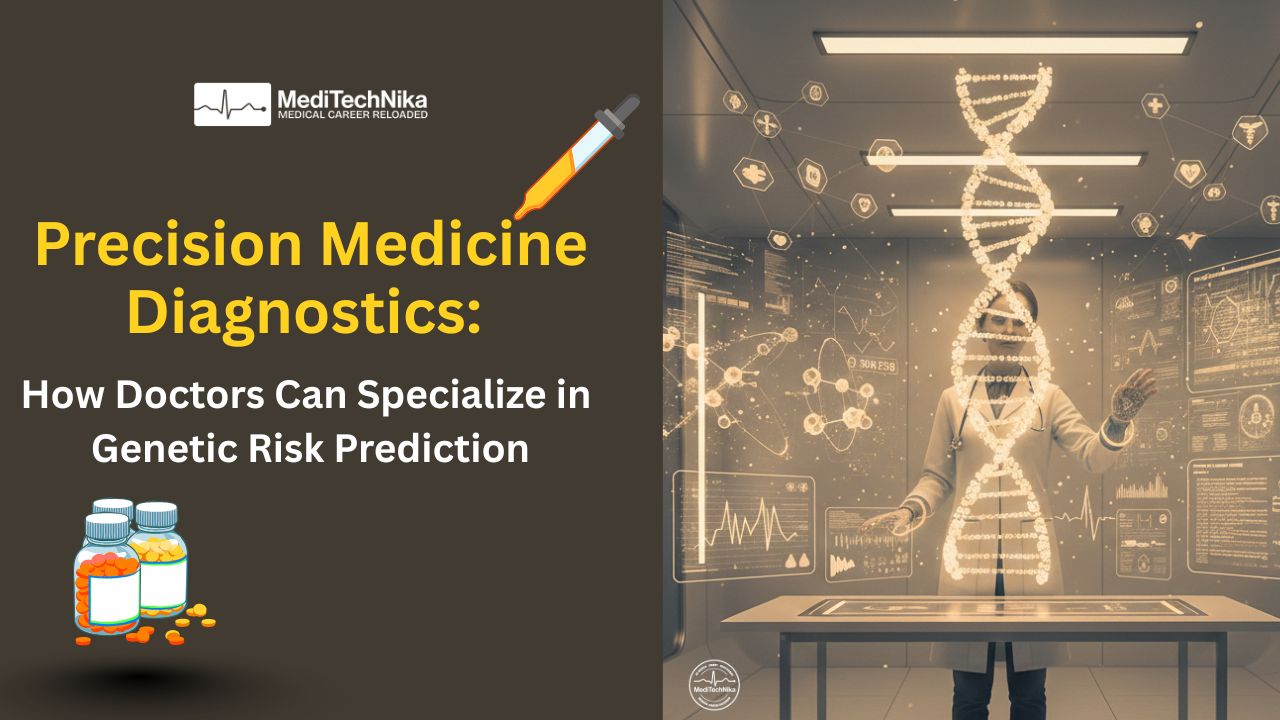
Precision Medicine Diagnostics for Doctors
The future of healthcare is rapidly shifting from prioritizing disease treatment to prioritizing early-stage disease detection. The key driver of this change is precision medicine. Instead of treating all patients the same way based on observed symptoms, precision medicine customises care to individual patients based on their genetic makeup, lifestyle habits, and environment. For medical and healthcare graduates, this field offers an exciting career path in which doctors use patients’ genes to assess the likelihood of symptoms before they even appear.
As genetic technologies are becoming more and more common in hospitals and clinics worldwide, researchers who are trained in this field will have a higher demand. This article will help you understand the basic concepts, like what precision medicine is, the use of next-generation sequencing, and guide you on how to build a career in this fast-growing area.
What Is Precision Medicine?
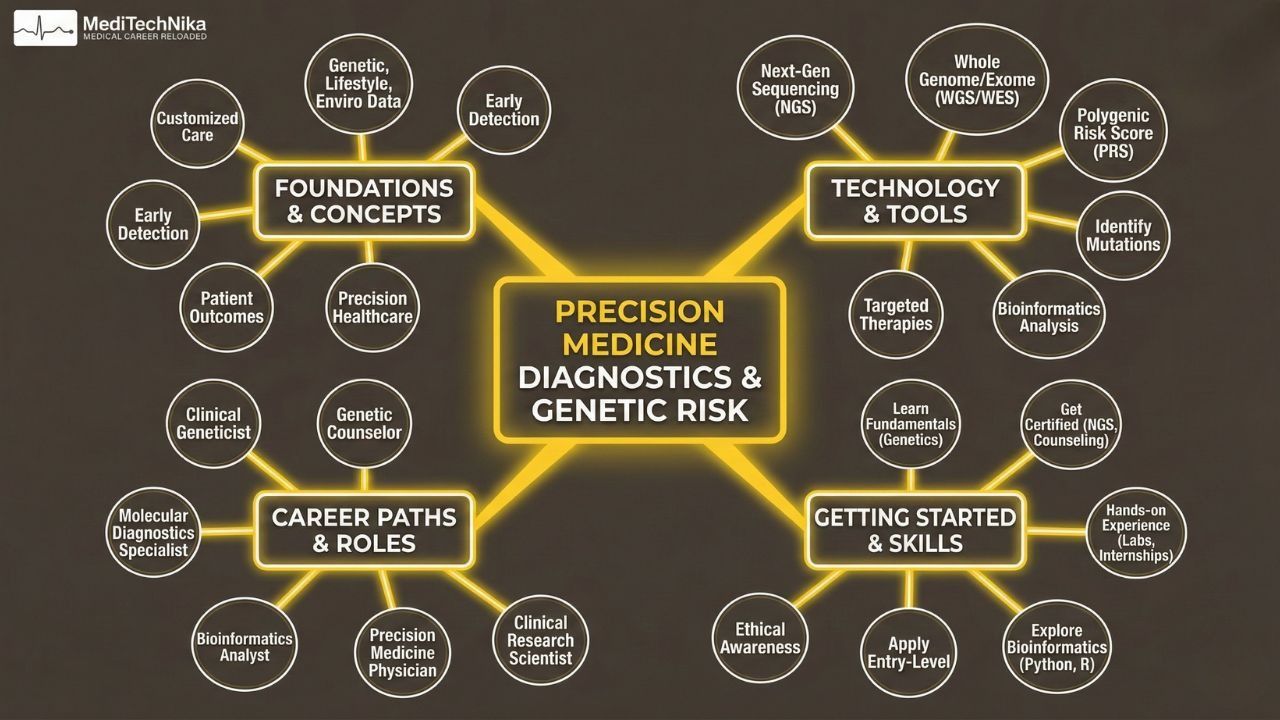
Precision medicine is basically an approach in the healthcare sector that uses information about a person’s genetic makeup, lifestyle habits, and how environmental changes are altering them. Rather than relying on general medicines that are not personalised, precision medicine will help doctors choose the proper treatment for the right patient at the right time.
A few examples include:
- Genetic testing on patients to identify the hereditary risks they possess
- Pharmacogenomics, which will predict how a person will respond to a particular drug.
- Targeted therapies that are used in oncology
- Early screening for individuals who are at high risk
Precision Healthcare: The Bigger Picture
While Precision medicine focuses on individualized treatment plans, precision healthcare will extend this idea further. It will integrate genetic makeup, digital healthcare tools, clinical records, and lifestyle data to provide a comprehensive overview of a patient’s health.
Precision healthcare allows clinicians to:
- Predict diseases at early stages
- Personalize treatments
- Reduce trial-and-error prescribing
- Identify people who are at risk
- Improve long-term patient outcomes
For healthcare graduates, this will provide you with a future in which diagnosis and treatment will rely on patient data interpretation, genetic understanding, and targeted strategies.
Next-Generation Sequencing (NGS): The Technology Behind Precision Medicine
Next-generation sequencing plays a significant role. Next generation sequencing allows scientists and clinicians to read the person’s genetic code accurately, which can also help in further studies.
How NGS Helps Doctors and Clinicians?
Next generation sequencing can detect the mutations that are linked to cancer, identify minor genetic disorders, guide targeted therapies, and evaluate the tumor markers present. It can also analyze thousands of genes simultaneously in less time.
Common NGS Tests that are used in Clinics
- Whole genome sequencing (WGS)
- Whole exome sequencing (WES)
- Gene panels for oncology, cardiology, neurology, etc.
For graduates seeking to enter diagnostic labs, biotechnology companies, or research institutes, knowledge of NGS is a significant advantage.
Polygenic Risk Score (PRS): Predicting Disease from Multiple Genes
While genetic mutations cause some diseases that result from a single-gene defect, most conditions, such as diabetes, heart disease, and hypertension, are influenced by multiple gene mutations. This is when polygenic risk scores will come into the picture.
Polygenic risk scores will evaluate thousands of genetic markers, called SNPs, to assess a person’s risk of disease.
Why is PRS Important?
- It identifies individuals who do not show any symptoms in the beginning stages.
- It helps clinicians create personalized prevention plans.
- It gives precautions for medical and lifestyle changes that are needed.
- It supports long-term disease monitoring.
PRS is becoming a tool for disease prevention, particularly in cardiology, oncology, reproductive medicine, and metabolic disorders.
As a medical professional, understanding this tool will give you an upper hand in early risk detection and personalised patient care.
Genetic Risk Prediction: The New Direction in Medical Careers
Genetic risk prediction is essential for precision diagnostics. It uses techniques such as NGS, PRS, and targeted genetic testing to evaluate the risk of developing disease in patients.
Why is this Field Growing?
- Patients want early and accurate answers regarding their health
- Many hospitals are setting up genomic centres.
- Governments and private companies are investing more in genetic testing.
- Biotech and pharmaceutical companies are now relying on genetic insights to develop new therapies.
This growth opportunity opens new opportunities to medical and healthcare graduates who can eventually evolve to newer technologies and developments.
Career Paths in Precision Medicine Diagnostics
1. Clinical Geneticist
Diagnoses genetic conditions, interprets test results, and counsels patients.
2. Genetic Counselor
Helps patients understand genetic risks and guides them through decision-making.
3. Molecular Diagnostics Specialist
Works with NGS, PCR, and other advanced molecular tools in diagnostic labs.
4. Bioinformatics Analyst
Uses software and algorithms to analyze complex genetic data from next generation sequencing.
5. Precision Medicine Physician
Applies genetic data directly in clinical care, especially in oncology, cardiology, and endocrinology.
6. Clinical Research Scientist
Works with biotech companies on gene-based therapies, targeted drugs, and clinical trials.
Skills You Need to Build a Career in Precision Medicine
You don’t need deep genetic expertise to begin. Start with:
- Basic genetics and genomics
- Understanding of NGS technologies
- Ability to interpret lab reports
- Knowledge of biomarkers and genetic variants
- Communication skills for explaining results
- Awareness of ethical issues in genetic testing
- Interest in personalized healthcare
You can strengthen these skills through online courses, workshops, internships, and lab training programs.
How to Get Started as a Student or Early Graduate?
Step 1: Learn the fundamentals
Start with courses in genetics, molecular biology, and precision medicine.
Step 2: Get NGS or genetic counseling certification
Short training programs can dramatically improve employability.
Step 3: Gain hands-on experience
Work or intern in diagnostic labs, genomics centers, or biotech companies.
Step 4: Explore basic bioinformatics
Learning Python, R, or genetic data analysis is a significant advantage.
Step 5: Apply for entry-level positions
Roles such as NGS technician, molecular biology associate, or clinical research coordinator are good starting points.
Final Thoughts
Precision medicine is not just a new trend-it is the future of healthcare. With tools like Next-Generation Sequencing, Polygenic Risk Scores, and data-driven precision healthcare, clinicians can now predict disease before it appears and design personalized care for every patient.
For medical and healthcare graduates, this field offers meaningful, innovative, and future-proof careers. By starting early and building the right skills, you can become part of the next significant transformation in medicine, one where diagnosis is smarter, prevention is earlier, and treatments are truly individualized.