


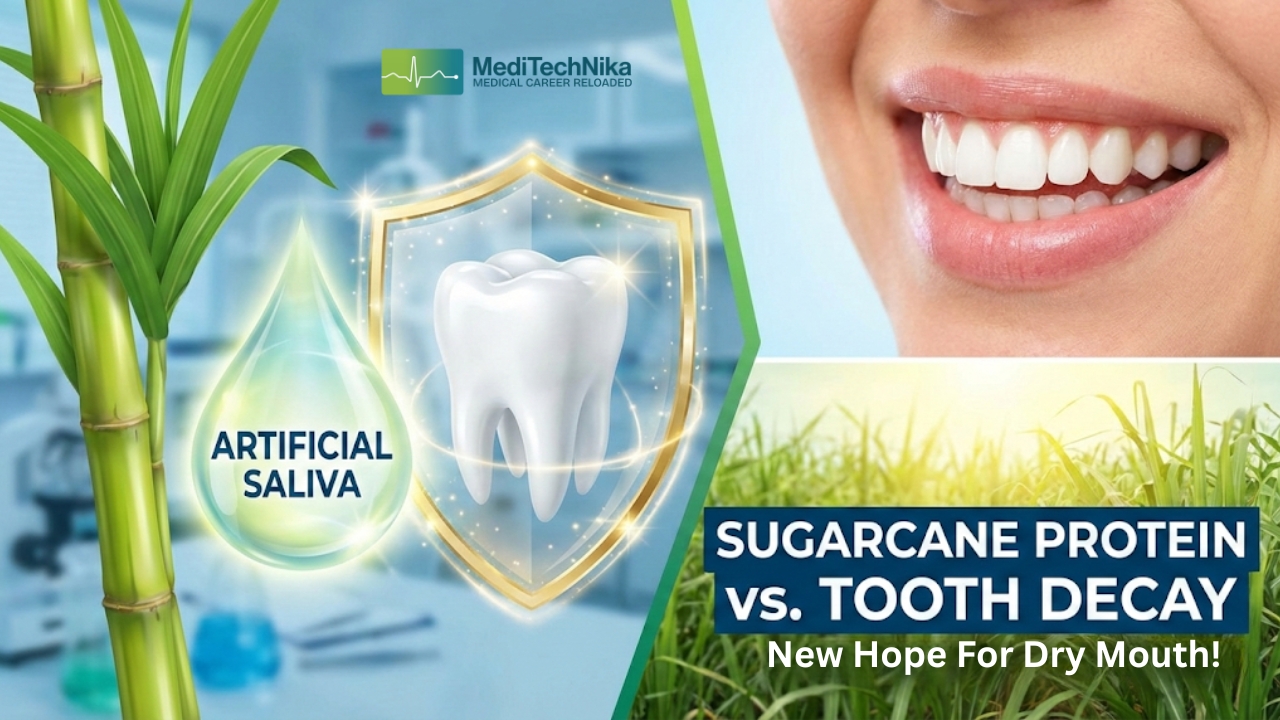
Sugarcane Protein Artificial Saliva Offers New Hope Against Tooth Decay
Artificial saliva? Yes, you read it right. A new fascinating discovery in the field of dental science is drawing a lot of attention. An artificial saliva was made using sugarcane protein that may help protect the teeth in people who suffer from dry mouth, which is more common in cancer patients.
Researchers in Brazil developed this, and this innovation does not just help with mouth dryness; it also protects the teeth by mimicking the natural defense system of saliva. This gives hope to people who usually suffer from constant tooth decay.
Why Does Saliva Loss Cause Serious Dental Damage?
You all know that saliva acts as the strongest natural protector by controlling the bacteria, washing away food acids, and helping maintain the tooth enamel. When the production of saliva decreases, the teeth weaken.
There will be damage to the salivary glands when patients undergo radiation therapy for neck and head cancer. This leads to a condition called xerostomia or chronic dry mouth. When the saliva production drops, the cavities are formed quickly, and the enamel starts breaking down, even in people who undergo good oral hygiene.
Most products in the market only provide temporary comfort, and they do not stop tooth damage completely.
How is Sugarcane Protein Changing Artificial Saliva?
Scientists at the University of São Paulo’s Bauru School of Dentistry found that a protein in sugarcane, which is known as CANECPI-5, helps in protecting teeth in a different way.
This sugarcane protein gets attached to the tooth enamel and forms a thin protective coating. This coating acts like a shield similar to that created by the healthy saliva.
Sugarcane Protein Creates A Protective Shield for the Teeth
Researchers carried out laboratory tests by applying artificial saliva containing sugarcane protein to tooth samples on a daily basis. The results were good as the protein helped teeth in resisting acid attacks, which are caused by:
- Sugar-containing foods and drinks
- Fruit juices
- Alcohol
- Acids in the stomach
Sugarcane protein reduced mineral loss and protected the enamel, thereby preventing cavities and tooth sensitivities.
Sugarcane Protein Showed Better Results When Combined With Fluoride
The study also found that sugarcane protein works incredibly well when combined with fluoride and xylitol.
This combination led to:
- Lower bacterial activity
- Reduced enamel damage
- Fewer signs of early tooth decay
For patients with radiation-related dry mouth, this could be a major step forward, as there is currently no dedicated product designed to prevent severe post-treatment dental damage.
A Solution Designed for Cancer Patients
For many cancer survivors, dry mouth is a long-term or permanent condition. Over time, this leads to pain, infections, difficulty eating, and poor quality of life.
Researchers believe artificial saliva made with sugarcane protein could offer long-lasting protection, not just short-term relief. This makes it especially valuable for patients who can no longer produce natural saliva.
More Than a Mouthwash: Multiple Uses
One of the most promising aspects of this research is the versatility of the sugarcane protein.
Scientists have already tested it as:
- A mouthwash
- A dental gel
- A dissolvable oral film placed on the tongue
In all formats, the sugarcane protein showed strong protective effects, making it suitable for easy, at-home use.
From Research to Dental Innovation
The sugarcane protein used in this artificial saliva was first identified through Brazil’s Sugarcane Genome Project. Researchers initially studied it for its biological properties before noticing how strongly it binds to smooth surfaces.
That observation led scientists to test it on tooth enamel — and the results opened an entirely new path for dental care research.
Beyond dentistry, early studies suggest this protein may also help reduce inflammation and support tissue healing.
What’s Next in Oral Care?
The research team has already filed a patent and is now working toward large-scale production. Future studies will focus on:
- Improving delivery methods for home use
- Combining sugarcane protein with vitamins like vitamin E
- Exploring its role in gum disease and wound healing
If successful, this innovation could redefine how dentists treat dry mouth and severe tooth decay.
Why Does This Discovery Matter?
Artificial saliva made with sugarcane protein represents a shift from symptom relief to real tooth protection. By rebuilding the mouth’s natural defense system, it offers new hope to patients who need it most.
For people living with chronic dry mouth, this could be a life-changing advancement.