

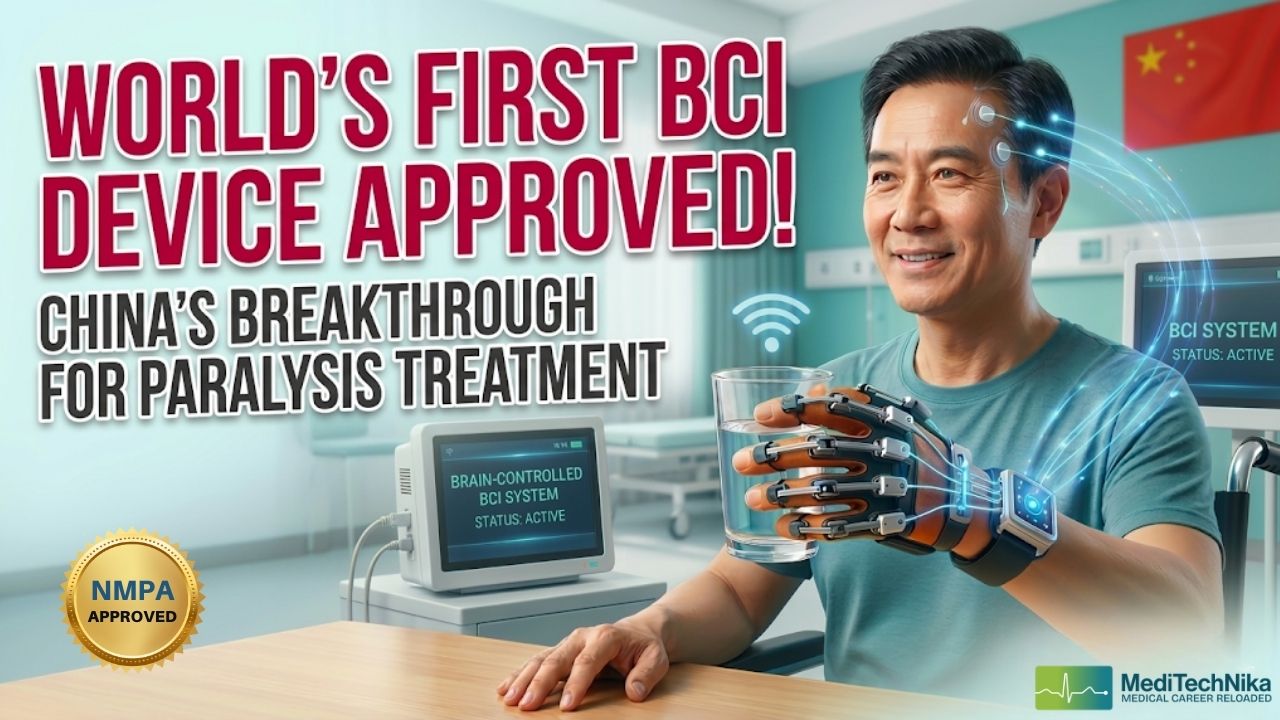
China Approves World’s First Brain Computer Interface Device
In a major innovative step in medical technology, China has now approved the world’s first brain-computer interface device for commercial use. This device is designed to help patients who suffer from severe paralysis regain their hand movement and improve their ability to perform their daily activities. This medical breakthrough could change the future treatment strategies for people with spinal and neurological disabilities.
A Historic Approval in Neurotechnology
China’s drug regulator, the National Medical Products Administration (NMPA) has now approved this device which is developed by Borui Kang Medical Technology in Shanghai.
This approval has now allowed it to be commercially sold for medical use, making it the first brain-computer interface device in the world to receive the clearance.
This could now encourage the development of similar new neurotechnology treatments for patients suffering from paralysis.
How Does the Technology Work?
This device works by connecting signals from the brain to an external assistive system that helps patients perform hand movements. Unlike the normal non invasive systems that is placed outside the skull, this technology is invasive where small electrodes are implanted to capture signals from brain. These signals are then translated into commands that control a wearable glove which would help patients perform grasping hand movements.
The implantation method is designed to be less invasive, using extradural placement that avoids deep penetration to brain. This system also relies on wireless technology which makes it easier for the patients to use it in daily life.
Who Can Benefit from the Device?
This technology is specially designed for patients who suffer from quadriplegia caused by cervical spinal cord injuries.
The eligible patients must:
- Be between 18 and 60 years old
- Have lived with spinal cord injury diagnosis for at least one year
- Remain in a stable condition for 6 months after treatment
- Be unable to grasp objects but retain some upper arm movements
These conditions help doctors to identify patients who may benefit from brain computer interface device.
Clinical Trials Show Encouraging Results
The clinical trails that were conducted before the approval of device showed promising results. The participants experienced improvements in their ability to grasp objects using the assistive glove controlled by brain signals.
The regulators also mentioned that these improvements helped patients to perform their daily activities more easily leading to better quality of life.
China’s Growing Focus on BCI Technology
Experts believe that country could see a wide use of brain computer interface device technologies in the next three to five years as there is increasing growth of research and development. At the same time, China is also accelerating its efforts to compete with global companies including Neuralink founded by Elon Musk.
A New Chapter for Medical Innovation
The approval of this brain computer interface device represents a significant advancement in modern healthcare. By directly linking the brain with assistive technology, such devices could transform treatment options for people living with paralysis.
As research continues, experts believe brain-computer interfaces could eventually support recovery in stroke patients, help people communicate after severe neurological damage, and expand possibilities in rehabilitation medicine. For many patients, this technology brings a new level of hope for restoring movement and independence.


