

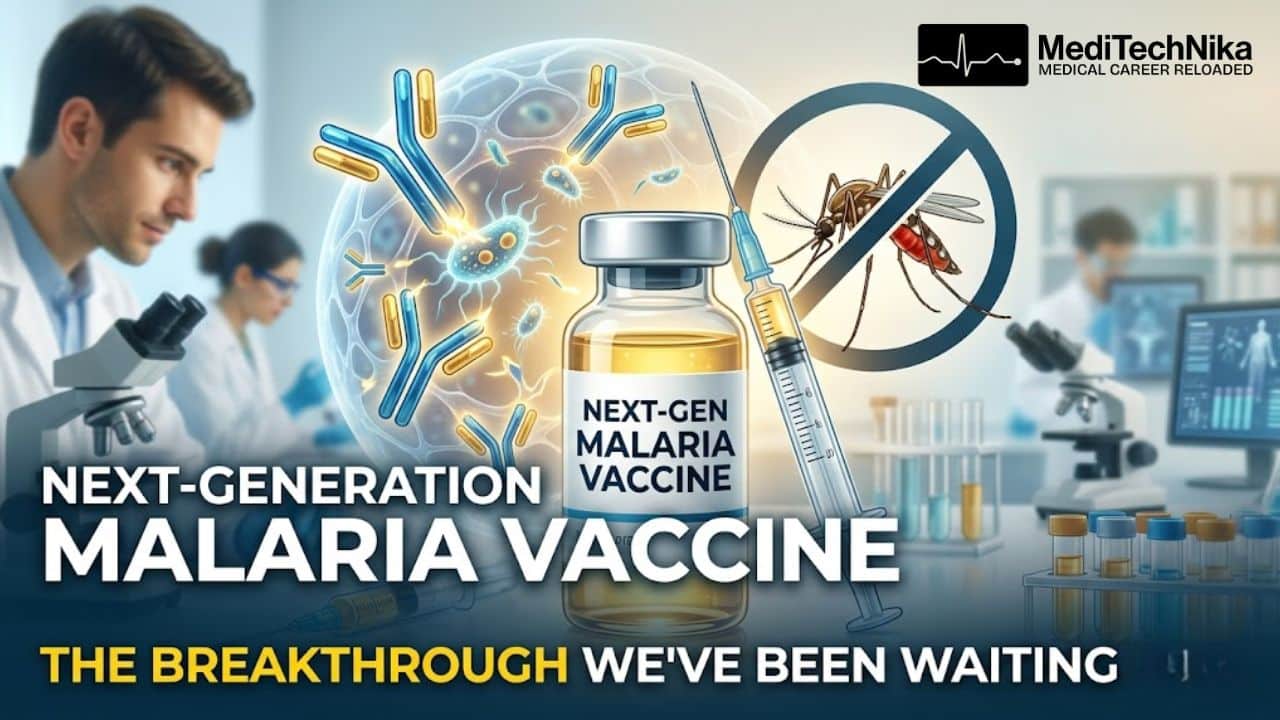
Next Generation Malaria Vaccine
Malaria has remained one of those diseases that the world knows how to prevent but is unable to stop for many years. There was a constant risk of Malaria every year in Africa and all around the world. The complex lifecycle of the malarial parasite has made vaccine development challenging despite the control efforts. That’s why there is a need for a Next Generation Malaria Vaccine.
The University of Oxford and the Serum Institute of India have signed a licensing agreement to advance the next-generation R78C malaria vaccine candidate. This is a part of a broader strategy to develop a multi-stage vaccine that targets the parasite more effectively.
What makes this Malaria Vaccine Special?
Most malaria vaccines, such as the WHO-recommended RTS, S and the newer R21, developed so far, focus on the pre-erythrocytic stage. That was aimed at stopping the parasite before it infects red blood cells. These vaccines have shown ~30–75% efficacy in different settings. But their protection can become weaker over time.
R78C has a different approach. R78C is a blood-stage vaccine component. It is based on two antigens of Plasmodium falciparum, such as
- RIPR (Rh5 interacting protein)
- CyPRA (Cysteine-rich protective antigen)
These antigens play an important role in the ability of the parasite to invade red blood cells. The Malaria Vaccine aims to block parasite replication in the bloodstream by targeting the parasite. This is where the clinical symptoms occur.
This is part of a multi-stage vaccine strategy, which combines:
- Pre-erythrocytic components (e.g., R21 – targeting liver-stage infection)
- Blood-stage components (e.g., RH5.1 and now R78C – targeting red blood cell invasion)
The goal is layered protection:
- Prevent infection
- Reduce parasite multiplication
- Limit disease severity and transmission
This systems-level approach is widely considered one of the most promising paths toward high-efficacy malaria vaccines (>80%).
The ExpreS2 Platform
A parallel agreement between the Serum Institute of India and ExpreS2ion Biotechnologies is an important technical detail in this development.
The ExpreS2 expression system is a Drosophila S2 cell-based platform used for producing recombinant proteins. This system offers high-yield antigen production, proper protein folding, and scalability of industrial vaccine production.
This platform has already been used in producing RH5.1 and R78C components for clinical-stage studies. This is ensuring consistency between research and manufacturing pipelines.
What Experts Say About this Malaria Vaccine?
Simon Draper, Professor of Vaccinology and Translational Medicine at the University of Oxford, described the agreement as an important milestone. He said that the combination of multiple antigens could improve the effectiveness and efficiency of the vaccine. He also said that the collaboration with the Serum Institute of India is essential for the successful manufacturing of the vaccine on a large and accessible scale.
Dr. Umesh Shaligram, Executive Director, Serum Institute of India Pvt. Ltd., said that malaria prevention needs constant innovation from the industry side. According to him, the collaboration with the University of Oxford supports the continued development of next-generation malaria vaccine candidates.
Dr. Matthew Carpenter, Deputy Head of Licensing and Ventures for Life Sciences, added that the agreement reflects how academic research can translate into real-world global health impact.
Why This New Malaria Vaccine Development Matters?
Malaria control has plateaued in recent years. Factors such as Insecticide resistance in mosquitoes, Drug resistance in parasites, and climate-driven changes in transmission patterns are slowing progress.
Vaccines are seen as a critical next step. But current tools are not enough on their own.
The collaboration between the University of Oxford and Serum Institute of India represents a change toward integrated vaccine design. If successful, a multi-stage Malaria Vaccine could significantly reduce transmission rates, lower the burden of severe disease, and support long-term eradication strategies.
What is the Future?
The ecosystem behind malaria vaccine development stands out. Together, the University of Oxford and the Serum Institute of India form a faster pipeline. This kind of coordinated approach could balance the disease that has lasted for many centuries.
The path ahead still involves clinical testing, regulatory approvals, and real-world validation.
The next chapter in the Malaria Vaccine story is all about building smarter and more comprehensive solutions.


